A dog bite’s healing time depends on severity. Minor superficial bites close in 7 to 10 days, while uncomplicated wounds take about 10. Deep punctures need 3 to 6 weeks or longer, and severe bites requiring stitches or surgery can take months. You’ll notice inflammation, redness, and swelling early on, peaking within days. Watch for delayed symptoms like fever or spreading redness, which signal infection. Understanding each stage helps you recognize what’s coming next.
Key Takeaways
- Healing time varies by severity: minor bites heal in 7, 10 days, while deep punctures take 3, 6 weeks or longer.
- The inflammatory phase lasts 2, 5 days, bringing redness, swelling, and soreness that may worsen before gradually improving.
- Seek treatment within six hours for the best healing outcome, and monitor the wound closely during the first 0, 3 days.
- Delayed warning signs include fever, chills, headache, malaise, or redness spreading beyond the original bite, signaling possible infection.
- Itching weeks or months later reflects normal tissue repair and scar maturation, which can extend from 1 to 12 months.
The typical dog bite healing timeline
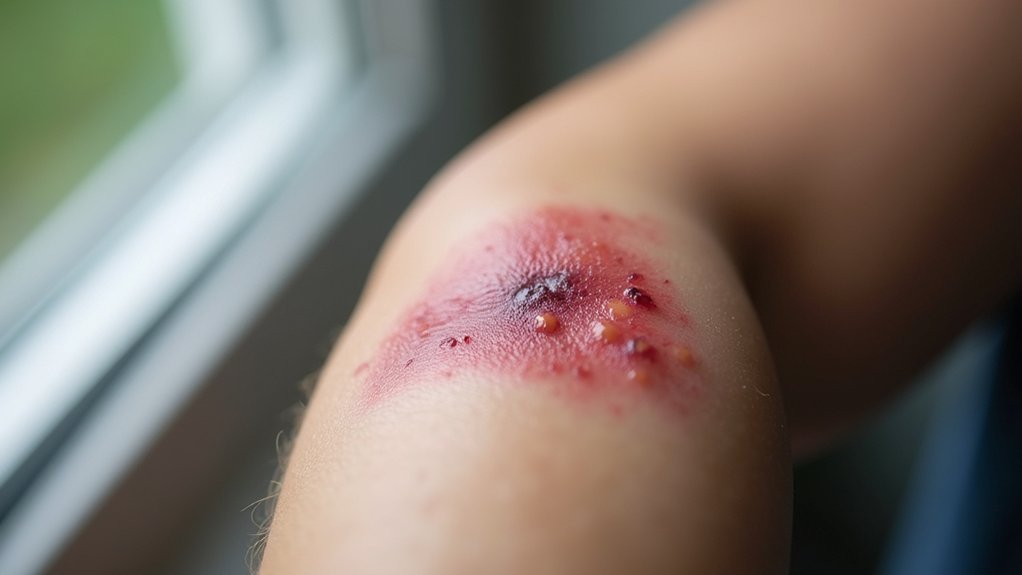
A dog bite takes 7 to 10 days to months to heal, depending on the wound’s severity and how quickly you get care. Minor, superficial bites that don’t become infected often heal in 7 to 10 days, with many uncomplicated wounds nearly closed by day 10. Deeper puncture wounds typically take 3 to 6 weeks or longer, while severe bites requiring stitches, surgery, or complicated by infection can take months to fully resolve.
| Wound Type | Typical Healing Time |
|---|---|
| Minor superficial bite | 7 to 10 days |
| Uncomplicated bite | About 10 days |
| Deep puncture wound | 3 to 6 weeks or longer |
| Severe bite (stitches/surgery/infection) | Months |
What happens in the first hours and days
In the first hours and days, your body launches its first repair responses, and your treatment decisions carry the most weight. Within the first 0 to 3 days, inflammation begins, producing redness, swelling, soreness, and pain. Simultaneously, debridement starts almost immediately as your body clears bacteria and damaged tissue. Getting treated within six hours gives you the best chance of healing without complications.
- Inflammation: Redness, swelling, and pain appear within 0 to 3 days.
- Debridement: Your body clears bacteria and dead tissue immediately.
- Timing: Seek care within six hours to reduce complications.
- Monitoring: Watch for worsening redness, swelling, or escalating pain signaling infection.
Swelling and inflammation over time
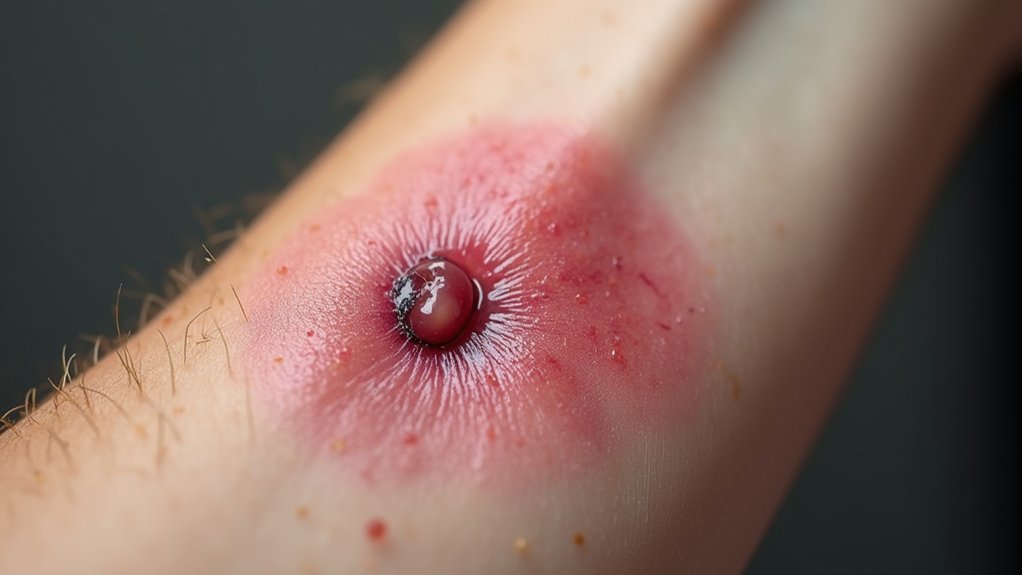
Swelling seems to worsen before it improves because your body’s inflammatory phase kicks in during the first 0 to 3 days, triggering redness, swelling, soreness, and pain as blood flow increases to the injured area. This phase typically lasts about 2 to 5 days. During this time, debridement starts almost immediately, clearing bacteria and damaged tissue, and it can continue through roughly day 21. As you move past the peak, you’ll notice redness and swelling gradually decrease, which signals healing is progressing. But watch closely: if swelling worsens instead of subsiding after the first few days, that can indicate infection. Persistent or increasing pain after this early window also suggests delayed healing. Monitoring these changes helps you distinguish normal recovery from complications needing medical attention.
Delayed reactions: fever, headache, and chills
Fever, headache, and chills after a dog bite are signs that infection may have moved beyond the wound itself. These systemic symptoms often appear days after the bite, signaling that bacteria have spread past the local tissue. Because delayed medical care raises complication risk, you shouldn’t dismiss these reactions, especially if the wound wasn’t treated within six hours.
Systemic symptoms like fever and chills signal infection has spread beyond the wound, delayed care raises your complication risk.
Watch for these warning signs:
- Fever that develops or worsens after the first few days
- Chills accompanying escalating wound pain or redness
- Headache paired with fatigue or general malaise
- Spreading redness or swelling extending beyond the original bite
If you notice any of these, seek professional treatment promptly. Deeper infections can extend recovery to four to eight weeks or longer.
Why some symptoms appear later
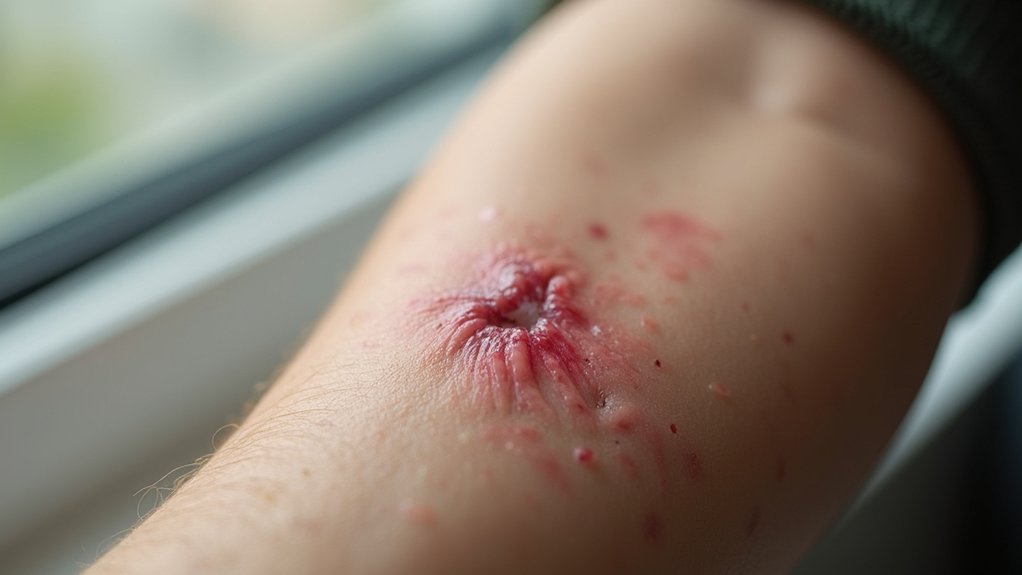
Symptoms appear later because your body stages its healing response over time. Your inflammatory phase begins within the first 0 to 3 days, driving redness, swelling, and soreness, but complications often emerge later. Debridement continues through about day 21 as your body clears bacteria and damaged tissue, so infection can develop gradually rather than immediately. If you didn’t receive care within six hours, your risk of delayed complications climbs. Deeper puncture wounds trap bacteria beneath sealed skin, letting infection build before it becomes obvious. Hematomas may take weeks to resolve, and pain that worsens after the first few days signals delayed healing. Your age, wound depth, and location all influence when symptoms finally appear.
Itching weeks or months after a bite
Itching weeks or months after a bite usually indicates one of the following:
- Active tissue repair as new cells replace injured tissue around day 4 through day 21
- Scar formation beginning in the repair phase and continuing through remodeling
- Nerve regeneration as damaged fibers reconnect
- Scar maturation that can extend 1 to 12 months or longer after closure
Don’t ignore itching paired with worsening redness.
What is normal vs. what is not
You can tell whether your recovery is on track by watching for a predictable healing pattern: redness and swelling decrease after the first few days, pain becomes manageable, wound edges seal together, and itching replaces soreness as tissue repairs. Scar formation during this phase is expected. What isn’t normal is worsening redness or swelling after day three, pain that intensifies rather than eases, or discharge signaling infection. Hard lumps beneath the skin may represent hematomas needing weeks to resolve, while discoloration, irregular edges, and dimpling can indicate cosmetic injury. If symptoms escalate instead of improving, or you notice signs of infection, seek medical care promptly. Infected wounds can extend recovery to weeks or months, so don’t ignore red flags.
Frequently Asked Questions
Should I Get a Rabies Shot After a Dog Bite?
You should seek immediate medical evaluation to determine whether you need rabies post-exposure prophylaxis. Your provider will assess the animal’s vaccination status, your local rabies risk, and the wound’s severity. If the dog’s rabies status is unknown or the animal appears sick, you’ll likely need the vaccine series. Don’t delay, rabies is nearly always fatal once symptoms start, so timely treatment’s critical. When in doubt, get evaluated promptly.
When Do I Need Stitches for a Dog Bite?
You’ll likely need stitches when a dog bite is deep, gaping, or has wound edges that won’t seal together on their own. Deeper wounds and severe bites often require stitches or surgery, signaling a more serious injury and a longer recovery. You should seek care within six hours, since wounds treated promptly heal with fewer complications. Bites on your hands or feet warrant extra caution, as they’re prone to slower healing.
Can I Treat a Minor Dog Bite at Home?
Yes, you can treat a minor, superficial dog bite at home if it isn’t deep and doesn’t show signs of infection. Clean it promptly, ideally within six hours, to lower complication risk. Superficial wounds often heal in 7 to 10 days. Watch for worsening redness, swelling, increasing pain, or discharge, which signal infection. If those develop, or the bite’s deep, seek medical care rather than continuing home treatment alone.
Will a Dog Bite Leave a Permanent Scar?
Not every dog bite leaves a permanent scar, but deeper wounds are more likely to. If your bite’s superficial and doesn’t get infected, you’ll often heal with minimal scarring. Deeper punctures, wounds requiring stitches or surgery, and infected bites raise your scarring risk. Location matters too, hands and feet heal more slowly. Scar maturation can continue for 1 to 12 months, and discoloration or dimpling may persist afterward.
Can I Sue the Owner for a Dog Bite?
This question falls outside the scope of the available medical information, which focuses on dog bite healing timelines and symptoms rather than legal matters. You’ll want to consult a personal injury attorney to assess your case, since liability depends on your jurisdiction’s laws and specific circumstances. Meanwhile, document everything: photograph your wounds, keep medical records, note treatment dates, and track any complications like infection, delayed healing, or permanent scarring for potential claims.