
Protect your rights, contact us today!
A felony built on what the state thinks you meant to do, not a sale. Protect your record and your freedom. Free consultation, six days a week.
Possession with intent to distribute is a felony drug charge under O.C.G.A. § 16-13-30(b), and the state does not have to prove you ever sold anything. It only has to convince a jury you meant to, usually by pointing at the amount of the drugs and the items found nearby. Attorney Gregory Chancy defends these charges, challenging both the search that produced the evidence and the thin circumstantial case the state builds to prove intent. The first call is free. Call(770) 627-3221.
Most people charged with possession with intent to distribute never sold a thing to anyone, and that surprises them. Under O.C.G.A. § 16-13-30(b), the charge requires the state to prove two things: that you possessed a controlled substance, and that you intended to distribute it. No actual sale is required, and no money has to change hands. The intent is inferred, built from circumstances rather than caught on camera.
The jump from simple possession to intent to distribute is enormous. Simple possession can sometimes be handled as a lower-level matter or through conditional discharge, but intent to distribute is a serious felony, and being charged with the higher offense closes off options that would otherwise be on the table. That is why whether the state can really support the intent element, and not just the possession, is so often where these cases are won or lost.
Because prosecutors rarely have direct proof of a sale, they build intent from circumstantial evidence, and Georgia sets no fixed weight that automatically triggers the charge. Instead the state points to a combination of factors: a quantity larger than it argues a person would keep for personal use, drugs divided into separate baggies or packages, digital scales, large amounts of cash in small bills, multiple phones, and text messages it reads as arranging sales.
None of that is a sale. It is an argument that a sale was coming, and every piece of it has an innocent explanation. A scale has countless legitimate uses. Cash is not a crime. A larger quantity can reflect personal tolerance or bulk purchasing rather than dealing. Because there is no magic number and no required transaction, the intent case is an inference, and an inference can be taken apart.
Possession with intent to distribute is a felony, and the sentence depends on the drug involved. For a first offense involving most controlled substances, the range is one to ten years in prison, with second and subsequent offenses carrying substantially more, and heavy fines apply. The felony classification itself is the bigger long-term problem for many people: it closes off first-offender options that a simple possession charge might have qualified for, and it leaves a permanent felony record.
The exposure climbs with certain circumstances. A prior felony drug conviction can increase the sentencing range sharply, and an offense within 1,000 feet of a school, park, or housing project falls under a drug-free-zone enhancement under O.C.G.A. § 16-13-32.4 that can add years. And if the weight crosses a trafficking threshold, the charge stops being about intent at all and becomes trafficking, which carries mandatory minimum sentences. Pushing a charge down from intent to distribute to simple possession can change a person’s entire future.
A possession with intent defense works on both halves of the charge: the possession and the intent. On possession, the first question is whether the search was lawful, because drugs found through an unlawful stop or search can be suppressed, and where they were found in a shared car or home, the state has to prove they were actually yours. On intent, the defense takes apart the circumstantial story piece by piece, offering the innocent explanation for the cash, the phones, and the packaging, and meeting the quantity argument directly.
Without direct evidence of a sale, an intent charge can often be reduced to simple possession or challenged outright. That reduction matters enormously, because simple possession carries far less exposure and can reopen the first-offender and conditional-discharge doors the felony closed. The defense also examines the lab testing, the weight, and the chain of custody. The goal in many of these cases is to strip away the intent element and leave the state with, at most, a possession charge.
A possession with intent defense works on both halves of the charge: the possession and the intent. On possession, the first question is whether the search was lawful, because drugs found through an unlawful stop or search can be suppressed, and where they were found in a shared car or home, the state has to prove they were actually yours. On intent, the defense takes apart the circumstantial story piece by piece, offering the innocent explanation for the cash, the phones, and the packaging, and meeting the quantity argument directly.
Without direct evidence of a sale, an intent charge can often be reduced to simple possession or challenged outright. That reduction matters enormously, because simple possession carries far less exposure and can reopen the first-offender and conditional-discharge doors the felony closed. The defense also examines the lab testing, the weight, and the chain of custody. The goal in many of these cases is to strip away the intent element and leave the state with, at most, a possession charge.
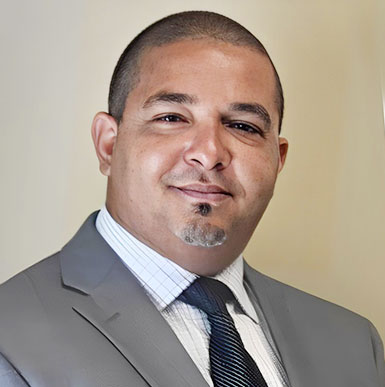
Gregory Chancy, Esq. is the attorney and founder of Cobb Defense, and he handles every drug case personally, from the first call through resolution. He earned his law degree from John Marshall Law School in Atlanta and has practiced law in Georgia since 2017, and he is an Active Member in Good Standing of the State Bar of Georgia with no public discipline on record. He is a member of the State Bar’s Criminal Law Section, along with the Cobb County Bar Association, the Georgia Trial Lawyers Association, and the American Bar Association. Before law, he spent more than fifteen years in engineering, a background that shapes the methodical way he takes apart the circumstantial evidence an intent case is built on.
Clients work with attorney Chancy himself, not a rotating cast of staff, and every case is prepared as though it will go to trial. You can verify his license and standing with the State Bar of Georgia. Consultations are always free.
Yes. The state does not have to prove an actual sale. It only has to convince a jury you intended to distribute, usually by pointing to the quantity of drugs and items like scales, cash, or packaging.
Simple possession means having drugs for personal use, while possession with intent means the state believes you meant to sell or share them. Intent to distribute is a felony and carries much harsher penalties than simple possession.
Constructive possession means the drugs were found somewhere you control, like your car or home, rather than on your person. When more than one person had access to that space, the state has a harder time proving the drugs were actually yours.
The state usually infers intent from circumstantial evidence rather than a sale, such as a large quantity of drugs, scales, baggies, cash, or multiple phones. Each of those items can have an innocent explanation, which is where the defense focuses.
Yes. Without direct evidence of a sale, an intent-to-distribute charge can often be reduced to simple possession or challenged outright, depending on the search, the evidence, and the facts of the case.
The Law Office of Gregory Chancy defends possession with intent cases across its service area. Call (770) 627-3221 to confirm the office covers your area and to set up a free consultation.
A possession with intent charge turns ordinary possession into a felony on the strength of an argument, and that argument can be answered, but the earlier a lawyer reviews the case, the more can be done. Call (770) 627-3221 for a free consultation with attorney Gregory Chancy, or use the form on this page. Every conversation is confidential, and the first call costs nothing.
If you have questions about your case or need immediate legal assistance, please complete the confidential contact form.