
Protect your rights, contact us today!
Charged with a crime? Protect your record, your freedom, and your future. Free consultation, six days a week.
A criminal charge threatens your freedom, your record, and your reputation, and the decisions you make in the first days can shape how the whole case turns out. Attorney Gregory Chancy defends people accused of crimes, from first-time misdemeanors to serious felonies, handling each case personally and building the defense around the specific charge and the court that will hear it. The first call is free. Call (770) 627-3221.
Criminal cases in Cobb County move through the State Court and the Superior Court in Marietta, and how a case is handled from the start depends on knowing those courts. Cobb Defense represents people charged with crimes throughout Cobb County and Marietta, dealing with the prosecutors and the local process directly.
A criminal defense lawyer who works in these courts regularly understands how charges are handled here, when a reduction or a dismissal is realistic, and how to move quickly when the timing matters. That local footing is the difference between a defense that reacts to the case and one that stays ahead of it. It also means honest expectations from the first conversation, because a lawyer who knows the local courts can tell you early what a case like yours usually looks like.
The firm defends the full range of criminal charges, and each one has its own law, its own court, and its own defense. Each links to a dedicated page:
If your charge is not listed here, call (770) 627-3221. The firm handles many charges beyond this list, and the consultation is free.
A criminal conviction reaches far past the courtroom. Beyond jail or prison time, fines, and probation, a conviction leaves a permanent record that shows up on every background check an employer, a landlord, or a licensing board runs. Some convictions carry their own lasting consequences: the loss of firearm rights, a driver’s license suspension, immigration effects for non-citizens, and registration requirements for certain offenses.
These collateral consequences often outlast the sentence itself, and they are a large part of why fighting a charge, rather than simply pleading it out, matters so much. A charge is an accusation, not a conviction, and what happens between the two is where a defense does its work.
Every criminal case is built on evidence, and every piece of that evidence is something the defense can examine. The starting point is how the evidence was gathered: whether the stop, the search, or the arrest was lawful, because evidence obtained in violation of your rights can sometimes be kept out of the case entirely.
From there the defense tests whether the state can actually prove each element of the charge, whether the witnesses are reliable, and whether the account holds together. Some cases are won on a pretrial motion, others through negotiation for a reduced charge, and others at trial. The right path depends on the facts, and the job is to find the one that leads to the best outcome for you rather than the one that is simply easiest to close.
Most criminal cases follow the same broad path, and understanding it removes some of the fear. It begins with arrest and booking, followed by a first appearance and bond, then arraignment, where the charge is formally read and a plea is entered. Before trial, the defense reviews the evidence and files motions, including motions to suppress evidence where the police crossed a legal line.
Many cases resolve through negotiation at this stage, but if the state will not offer a fair result, the case proceeds to trial, where the prosecution must prove guilt beyond a reasonable doubt. Which court hears the case matters: misdemeanors, offenses carrying up to 12 months, are heard in State Court, while felonies, offenses carrying more than 12 months, are heard in Superior Court. That distinction shapes the timeline, the procedure, and the strategy.
Yes. Even a misdemeanor can carry jail time and a permanent record, and the state is represented by a trained prosecutor. A defense lawyer protects your rights, examines the evidence, and works toward a dismissal, a reduction, or the best available outcome.
Exercise your right to remain silent, do not consent to any search, and do not discuss the case with anyone but a lawyer. Contact a criminal defense attorney as soon as possible, and write down what you remember about the arrest while it is fresh.
Yes. Charges can be dismissed or reduced when the evidence is weak, when it was obtained unlawfully, or through negotiation, and eligible first-time charges may qualify for pretrial diversion that ends in a dismissal. The outcome depends on the facts of the case.
A misdemeanor is an offense carrying up to 12 months, heard in State Court, while a felony carries more than 12 months in prison and is heard in Superior Court. The classification drives the penalties, the court, and the long-term consequences.
A conviction generally stays on your record permanently unless it is eligible for record restriction. Avoiding the conviction, through a dismissal, a reduction, or diversion, is what protects your record long term.
It can. A conviction can appear on background checks and affect employment and professional licenses, and a felony conviction results in the loss of firearm and voting rights. These lasting consequences are one reason to fight a charge rather than simply plead to it.
Cobb Defense serves Cobb County and Marietta and represents clients across the surrounding area. Call (770) 627-3221 for a free consultation and to confirm the firm covers your area.
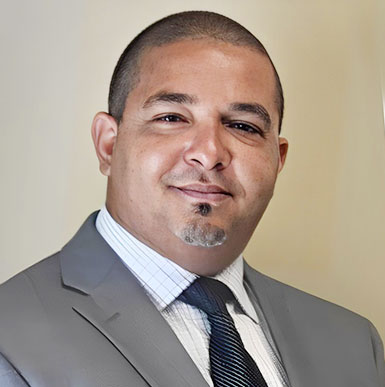
Gregory Chancy, Esq. is the attorney and founder of Cobb Defense, and he handles every criminal case personally, from the first call through resolution. He earned his law degree from John Marshall Law School in Atlanta and has practiced law in Georgia since 2017, and he is an Active Member in Good Standing of the State Bar of Georgia with no public discipline on record. He is a member of the State Bar’s Criminal Law Section, along with the Cobb County Bar Association, the Georgia Trial Lawyers Association, and the American Bar Association. Before law, he spent more than fifteen years in engineering, a background that shapes the methodical way he takes apart the evidence in a case.
Clients work with attorney Chancy himself, not a rotating cast of staff, and every case is prepared as though it will go to trial, which strengthens a client’s position whether the case is negotiated or argued to a jury. You can verify his license and standing with the State Bar of Georgia. Consultations are always free.
A criminal charge does not wait, and neither should your defense. The sooner your case is reviewed, the more can be done to protect your record, your freedom, and your future. Call (770) 627-3221 for a free consultation with attorney Gregory Chancy, or use the form on this page. Every conversation is confidential, and the first call costs nothing.
If you have questions about your case or need immediate legal assistance, please complete the confidential contact form.