Under U.S. law, you’ll find animals don’t have direct legal rights like humans but receive protection through federal and state regulations. The PACT Act criminalizes extreme cruelty with up to 7 years imprisonment, while state laws set specific standards for farm animal treatment, transport, and slaughter. You can report violations to local animal control or federal authorities. The complex framework of animal protection laws reveals an evolving terrain of legal safeguards worth exploring.
Federal Protections Against Animal Cruelty and Abuse

While animals historically had minimal legal protections, the 2019 Prevention of Animal Cruelty and Torture (PACT) Act marked a significant advancement in federal safeguards against severe animal abuse. You’ll find this law specifically targets intentional acts of extreme cruelty, including crushing, burning, drowning, and sexual exploitation of animals, with penalties up to seven years imprisonment. The act establishes animal crushing criminalization at the federal level. The USDA enforces minimum standards of care for regulated animals under its authority. Complementing these protections, the Animal Welfare Act establishes baseline care requirements for animals in zoos, laboratories, and commercial breeding facilities. The law’s reach extends to cases involving interstate commerce and federal property, though limitations of federal protections mean it doesn’t cover all instances of abuse. While the PACT Act enables emergency removal procedures in severe cases, it exempts necessary medical procedures and euthanasia. You should know that these federal protections work alongside state laws, focusing primarily on extreme cases while leaving day-to-day animal welfare oversight to local authorities.
State Laws Governing Farm Animal Treatment
State laws provide varying levels of protection for farm animals, with 15 states now mandating specific space requirements that allow animals to lie down, stand up, and turn around freely. However, some states are considering legislative rollbacks of these animal welfare protections due to egg supply concerns. You’ll find the strictest standards in California, where Proposition 12 sets exhaustive rules for animal movement and comfort, while states like Arizona and Colorado focus their regulations on eliminating specific confinement methods like battery cages and gestation crates. Recently enacted laws in Michigan and Colorado ensure that caged hen bans will protect over 10 million birds annually starting in 2025. When transporting farm animals to slaughter facilities, you must comply with state-specific handling guidelines that govern loading density, passage duration, and environmental conditions during transit. In 2023, the Supreme Court upheld California’s Proposition 12 as constitutional, cementing these animal welfare protections.
Space Requirements By State
Several U.S. states have enacted distinct farm animal space requirements, with California’s Proposition 12 setting the most extensive standards at 144 square inches per hen and untethered housing for breeding pigs. You’ll find cage-free housing mandates becoming increasingly common, with Arizona banning battery cages outright and Colorado requiring 80% more space than traditional systems. These animal welfare laws vary significantly between states, as shown by the available legal resources. The recent SCOTUS ruling in NPPC v. Ross upheld states’ ability to regulate animal housing conditions.
| State | Hen Requirements | Additional Standards |
|---|---|---|
| California | 144 sq in/hen | Untethered pig housing |
| Arizona | Battery cages banned | Ventilation requirements |
| Colorado | 80% more than standard | Gestation crate phase-out |
While enforcement varies by jurisdiction, these spatial requirements typically include proper ventilation requirements and freedom of movement. Florida initiated the initial confinement law in 2002, focusing on pig tethering, while newer legislation like Maine’s 2023 update aligns with California’s comprehensive approach. State-level livestock care boards in places like Ohio and Indiana help oversee and enforce these standards.
Transport and Handling Rules
Federal and state regulations establish detailed transport documentation requirements that you’ll need to navigate when moving livestock across state lines. You must obtain Certificates of Veterinary Inspection (CVIs) for most interstate livestock movement, though there are exemptions for certain low-risk commercial sheep and goats heading to slaughter. The National Research Council provides comprehensive guidelines for ensuring proper care during animal transit. Interstate Livestock websites allow users to quickly find state-specific import requirements and tagging sites.
States enforce strict traceability standards through mandatory documentation, veterinary inspections, and border inspection procedures. Advance planning months ahead may be required when organizing interstate livestock transportation. You’ll need to comply with time-based transport restrictions in 18 states, including required rest periods. Animals must receive humane treatment following Temple Grandin’s handling guidelines and federal welfare standards. Species-specific rules apply horses need individual identification, while cattle follow interstate protocols with state enforcement. For high-risk or scrapie-exposed animals, you’ll require special permits approved by VS District Offices.
Slaughter Oversight Standards
Three major gaps in slaughter oversight leave farm animals vulnerable to mistreatment under current law. The Animal Welfare Act excludes farmed animals, while the Humane Methods of Slaughter Act only covers cattle, sheep, and pigs – leaving birds and other species unprotected. Custom slaughter facility regulations often bypass federal inspection unless they’re involved in interstate commerce.
You’ll find these critical oversight gaps at both federal and state levels:
- Many states exempt “standard” farming practices from cruelty laws, even when they cause suffering
- Custom and on-farm slaughter operations frequently escape inspection requirements
- Organic slaughter standards offer limited protection, applying only to certified organic farms
- State enforcement varies widely, with many lacking resources to monitor compliance
Federal anti-cruelty laws are widely considered inadequate since they allow most common farming practices regardless of animal suffering.
The USDA’s strategic plan contains no animal welfare provisions or enforcement mechanisms through at least 2026.
Current legislative proposals aim to address these gaps, but progress remains slow due to industry resistance and federal preemption issues. The LOCAL Foods Act proposes expanding personal use exemptions, potentially further reducing oversight of animal treatment during slaughter.
Wildlife Conservation and Habitat Protection
Recent legislative measures have established critical protections for wildlife habitats through the designation of connectivity areas and corridors. You’ll find these measures focus heavily on voluntary conservation programs, with USDA support playing a key role in implementation. The 2025 Wildlife Corridors Act, introduced with bipartisan backing, specifically defines “American wildlife corridors” and includes adjacent lands in these protected zones.
You should know that regulatory flexibility exists for emergencies under Executive Order N-13-25, which allows for expedited cleanup and infrastructure recovery while maintaining conservation priorities. State-level initiatives complement federal efforts through Title 14 changes and boosted wildlife agency authority. These combined measures safeguard comprehensive habitat protection while emphasizing voluntary participation and diverse stakeholder engagement in conservation efforts.
Legal Status of Animals in Research and Testing
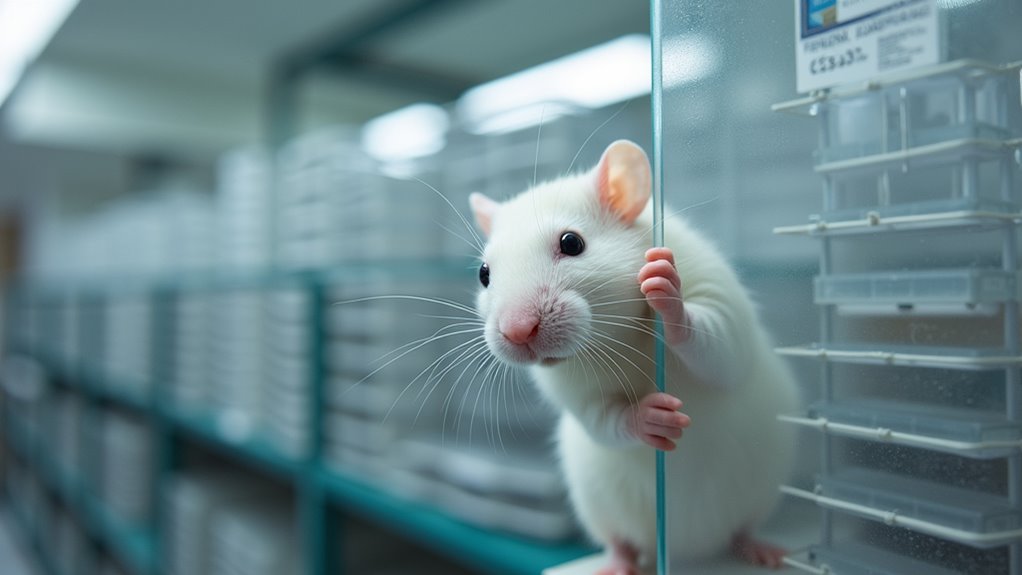
While animal testing has long been a standard requirement for drug development, significant legal reforms are now reshaping laboratory animal protections and testing requirements. The FDA Modernization Act 2.0 and new regulatory procedures are accelerating the shift in the direction of alternative methodologies that don’t rely on animal subjects.
You’ll find these key changes in research and testing regulations:
- Implementation of non-animal alternatives like organ-on-a-chip and in silico models for drug safety assessments
- Mandatory 30% reduction in mammal testing by 2025, with complete elimination targeted for 2035
- Integration of advanced computational tools and AI-based systems for toxicity predictions
- Cross-agency coordination between FDA and EPA to standardize validation of alternative testing methods
These reforms reflect growing recognition that modern technology can often provide more reliable, ethical testing solutions than traditional animal experiments.
Criminal Justice Response to Animal-Related Offenses
Animal abuse cases present unique challenges for the criminal justice system, moving beyond the controlled environments of research facilities to the complex domain of public enforcement. You’ll find that while 49 states now impose felony penalties for animal torture, effective prosecution often falters due to systemic gaps.
The FBI’s NIBRS data reveals concerning trends, with reported incidents rising from 1,156 in 2016 to 10,985 in 2020. Despite this tracking, inadequate training for law enforcement and data quality improvements remain critical needs. Animal control officers typically respond without proper law enforcement preparation, while jurisdictional variations complicate consistent enforcement.
Current statistics show approximately 10 million animals die annually from abuse, yet successful interventions depend heavily on cross-reporting with other crimes and collaborative efforts between agencies.
Public Health and Animal Disease Control Measures

Broad public health frameworks establish critical links between animal disease control and human population safety through interconnected legal mechanisms. You’ll find extensive systems that define the liability of livestock owners while enabling authorities to conduct monitoring of disease outbreaks through mandated testing and reporting protocols.
- Federal and state laws create enforcement mechanisms requiring owners to comply with vaccination schedules, sanitation standards, and disease reporting
- Authorities can implement emergency measures including quarantines, movement restrictions, and mandatory testing
- Health agencies maintain integrated surveillance networks connecting animal and human disease data for rapid response
- International standards guide risk assessment frameworks and diagnostic protocols to ascertain consistent disease management
These measures protect both animal welfare and public health through systematic prevention, detection, and control of dangerous pathogens.
Legal Standards for Animal Transport and Commerce
When you’re transporting animals across state lines, you’ll need to comply with both federal IATA Live Animals Regulations and state-specific requirements that govern safety standards and documentation. You must coordinate directly with carriers to understand their specific protocols, as airlines often maintain supplementary requirements beyond regulatory minimums. Your compliance with interstate movement regulations should demonstrate a clear focus on minimizing animal distress through proper handling practices, appropriate containment equipment, and adherence to carrier-specific safety guidelines.
Interstate Movement Requirements
Legal transport of animals across state lines requires strict adherence to federal regulations outlined in Title 9 CFR, Subchapter C. You’ll need to understand your liability for transport accidents and owner responsibilities for interstate movements, as these regulations protect both animals and public health.
Key requirements include:
- Obtaining Interstate Certificates of Veterinary Inspection (ICVIs) from accredited veterinarians before transport
- Maintaining complete documentation with specific retention periods: 5 years for cattle/equines, 2 years for swine/poultry
- Meeting state-specific entry requirements and obtaining necessary permits for high-risk animals
- Following exemption protocols for direct-to-slaughter movements or approved livestock facilities
These requirements vary by species and circumstance, with stricter standards applying to animals in restricted zones or those exposed to diseases like scrapie.
Carrier Safety Regulations
Building upon interstate movement requirements, carrier safety regulations establish strict protocols for animal transportation across all modes of commerce. You’ll need to comply with airline safety procedures that mandate secure containers, proper ventilation, and protection from extreme temperatures.
For temperatures below 45°F, you must obtain veterinary clearance requirements through acclimation certificates. Your animals’ containers must meet strict design standards they need handles for safe lifting, secure closures, and smooth interiors without hazards. You’re required to follow specific feeding schedules: animals under 16 weeks need food and water every 12 hours, while older ones require food every 24 hours and water every 12 hours. Remember, non-compliance with these regulations can result in penalties, making it essential to maintain proper documentation, including veterinary inspection certificates and written feeding instructions.
Enforcement Mechanisms and Reporting Systems
Enforcement of animal rights laws rests on a multi-layered system of federal, state, and local authorities working in concert. Through coordinated resource allocation and established reporting channels, these agencies work to protect animals from abuse and maintain compliance with welfare standards.
Animal welfare depends on unified action across government levels, with agencies collaborating to prevent abuse and enforce protection standards.
Key enforcement mechanisms include:
- Unannounced facility inspections by USDA Animal Care staff
- Official warnings and correction periods for minor violations
- Investigations and legal actions for serious infractions
- Animal confiscation in cases of extreme neglect
You’ll find multiple ways to report violations, from contacting local animal control to filing federal complaints. The system relies on both institutional oversight and public vigilance, with veterinarians, animal wardens, and concerned citizens all playing crucial roles in identifying and reporting potential violations. Mandatory record-keeping requirements and statistical tracking help uphold accountability throughout the enforcement process.
Frequently Asked Questions
Can Animals Be Named as Beneficiaries in Wills and Trusts?
While you can’t directly name animals as beneficiaries in legal documents, you can establish a legally enforceable trust for your household pet ownership needs. Through the Uniform Trust Act (adopted in 39 states), you’ll need to designate human trustees and caregivers who’ll manage funds and provide care for your pets. You’re able to specify detailed care instructions, but keep in mind that trust funding must be reasonable and proportionate to your pet’s expected lifetime needs.
Do Pet Custody Laws Exist During Divorce Proceedings?
While pet owners’ rights vary by state, most courts still treat pets as property during divorce proceedings. You’ll find that property division considerations typically determine custody, rather than traditional custody arrangements like those for children. California leads with progressive laws allowing judges to ponder pets’ best interests, but in most states, you’ll need to negotiate custody terms privately or accept the court’s property-based ruling. Document your role as primary caregiver to reinforce your case.
Are Emotional Support Animals Protected Differently Than Service Animals?
Yes, you’ll find emotional support animal rights are much more limited than service animal protections. While service animals have broad public access rights under the ADA, your emotional support animal only receives housing accommodations under the Fair Housing Act with proper documentation. You can’t take your ESA into restaurants, stores, or most public spaces like you could with a service animal, and airlines now classify them as pets.
Can Veterinarians Be Held Legally Liable for Malpractice?
Yes, you can pursue veterinarian negligence claims if your pet receives substandard care. To win your case, you’ll need to prove four elements: the vet’s duty to treat, breach of veterinarian standard of care, direct causation of harm, and actual damages. However, you should know that compensation typically covers only economic losses like treatment costs and market value. You’ll rarely receive damages for emotional distress or lost companionship in most jurisdictions.
Do Animals Have Standing to Sue in Court Through Representatives?
You’ll find that animals can’t directly sue in court, but they can be represented through legal guardianship arrangements and class action lawsuits filed by human proxies. While the Ninth Circuit has shown some openness to animal plaintiffs, most courts require human representatives to demonstrate personal injury. You can pursue cases through organizational plaintiffs or statutory pathways like the Endangered Species Act, which enables advocacy groups to litigate on animals’ behalf.