In every criminal case, the prosecution carries the entire weight of proving your guilt beyond a reasonable doubt, you don’t have to prove a thing. This means the government must establish every element of the crime, from the act itself to your mental state, with near-complete confidence. If they fall short on even one element, acquittal is required. Understanding how this standard works can reveal powerful defense strategies that protect your freedom.
What Does “Beyond a Reasonable Doubt” Actually Mean?

Certainty isn’t what the law demands, but it comes close. When prosecutors must prove guilt beyond a reasonable doubt, they’re meeting the highest standard of proof in American courts. You won’t find a more demanding threshold anywhere in the legal system.
This standard doesn’t require you to eliminate every imaginable question. Instead, it asks whether the evidence leaves you firmly convinced, without serious hesitation, that the defendant committed every element of the charged crime. If you’re relying on speculation or gut feelings, that’s not reasonable doubt. But if conflicts in the evidence or gaps in proof give you genuine pause rooted in reason and common sense, you haven’t reached the threshold. The only proper result is acquittal. In England and Wales, judges often avoid the phrase entirely, instead instructing jurors to be sure of guilt before convicting.
Why the Prosecution Bears the Full Burden of Proof
Because the government wields the power to investigate, charge, and imprison, it must also carry the full weight of proving guilt. You don’t bear the obligation to prove your innocence, the state must prove every element of the offense against you. This allocation reflects a core fairness principle: the party making the accusation must back it with evidence. In any burden of proof criminal case, three structural reasons justify this arrangement: How criminal trials work in Georgia involves a comprehensive examination of evidence and testimony presented by both the prosecution and the defense. Each side has the opportunity to challenge and substantiate claims, ensuring a balanced judicial process.
The state accuses, so the state must prove it, every element, every time, no exceptions.
- The state controls investigative resources, including police, forensic labs, and subpoena power.
- Forcing you to prove a negative under threat of punishment violates fundamental fairness.
- Legal tradition consistently assigns the evidentiary load to the accusing party.
If the prosecution’s evidence falls short on any required element, acquittal isn’t optional, it’s mandatory. Judges reinforce this by instructing juries that defendants do not have to prove anything in order to secure their freedom.
Two Burdens the Prosecution Must Carry

When you face criminal charges, the prosecution must satisfy two distinct burdens before a conviction can occur: the burden of production and the burden of persuasion. The burden of production requires prosecutors to introduce sufficient evidence, such as testimony, documents, or physical exhibits, to establish that a crime may have occurred and that you may be responsible. The burden of persuasion then demands that prosecutors convince the jury of your guilt beyond a reasonable doubt, and critically, neither burden ever shifts to you. This stands in stark contrast to civil cases, where the standard is merely a preponderance of the evidence, requiring only a greater than 50% likelihood of truth.
Burden of Production
The prosecution doesn’t carry just one burden at trial, it carries two. Before persuading you of anything, the prosecution must first satisfy its burden of production, the duty to present enough evidence on every element so the case reaches the jury at all.
Think of it as a gatekeeping threshold. The judge evaluates whether the prosecution’s evidence can rationally support the charge. If it can’t, the case never reaches you for deliberation.
The prosecution meets this burden through:
- Witness testimony connecting the defendant to the alleged conduct
- Physical evidence establishing essential facts of the offense
- Documents and records supplying additional evidentiary support
Without this foundational evidence, persuasion becomes irrelevant. You can’t weigh what doesn’t exist. Production comes first; persuasion follows.
Burden of Persuasion
Once evidence reaches the jury, a second and more demanding burden takes over: the burden of persuasion. This requires the prosecution to convince the fact finder that every element of the charged offense is true, beyond a reasonable doubt. It’s the highest burden of proof used in American criminal proceedings, exceeding both preponderance of the evidence and clear and convincing evidence standards. Hearsay evidence rules can complicate the burden of persuasion, as they often exclude critical information that could aid in establishing the truth.
You should understand that this standard demands high certainty, not absolute certainty. If reasonable doubt remains after you’ve evaluated all the evidence, conviction isn’t proper. The jury, not the prosecutor, determines whether this threshold’s been met.
The burden of persuasion never shifts to the defendant. It stays with the prosecution throughout trial, reinforcing the presumption of innocence and minimizing the risk of wrongful conviction. Closing arguments in criminal cases are critical moments where both sides summarize their positions and confront the jury with their interpretations of the evidence. The effectiveness of these arguments can heavily influence the jury’s understanding and final decision.
Both Rest on Prosecution
Because criminal law demands that the government justify every deprivation of liberty, both the burden of production and the burden of persuasion rest squarely on the prosecution, never on the defendant.
This allocation reflects the presumption of innocence and guarantees the state can’t convict you without meeting its full burden of proof. Consider what this means in practice:
- The prosecution must produce sufficient evidence to establish that a crime occurred and that you’re responsible, otherwise, the judge can dismiss the case before it ever reaches a jury.
- The prosecution must persuade the jury of your guilt beyond a reasonable doubt, the most demanding standard in law.
- You don’t carry either burden. You’re not required to prove innocence, testify, or present a single piece of evidence.
Every Element Must Be Proven Beyond a Reasonable Doubt
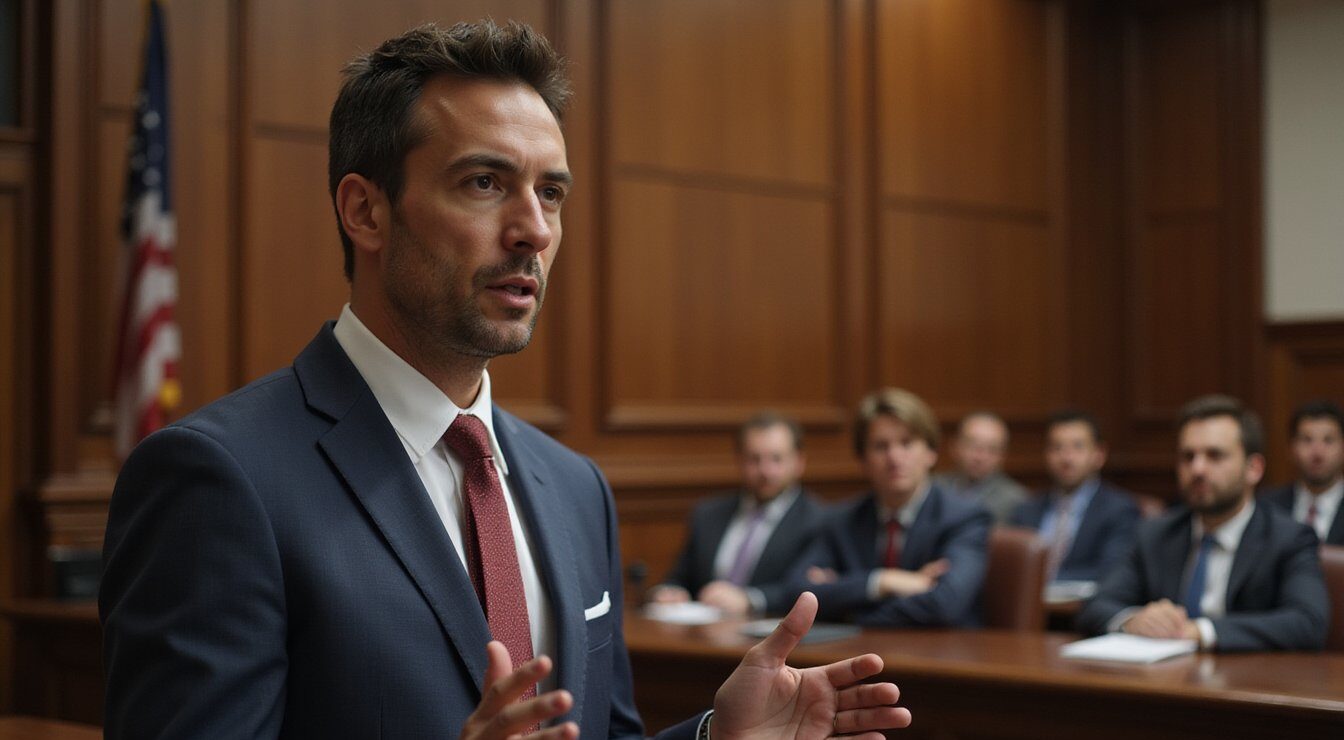
The prosecution can’t secure a conviction by proving most of the elements, it must prove every single one beyond a reasonable doubt. If even one essential element lacks sufficient proof, the entire case fails, and you’re entitled to acquittal. The law doesn’t bend this rule for any offense, no matter how serious the charge or how strong the remaining evidence appears.
Each Element Matters
Every criminal charge consists of distinct elements, and prosecutors must prove each one beyond a reasonable doubt, not just most of them. If even one element falls short, you’re entitled to acquittal regardless of how strong the remaining evidence appears.
Consider what prosecutors typically must establish:
- Actus reus, You committed the prohibited act voluntarily.
- Mens rea, You possessed the required mental state when acting.
- Causation, Your conduct produced the specific harm or result the statute requires.
Each component demands independent proof reaching near certitude. Jurors can’t fill gaps with speculation or general impressions of guilt. They must examine whether the evidence covers every required element, not whether you seem blameworthy overall. One unproven element means the prosecution hasn’t met its burden.
Incomplete Proof Fails
Understanding what prosecutors must prove is only half the picture, what matters equally is what happens when they don’t. When the prosecution leaves gaps in its case, missing corroboration, weak testimony, or unresolved inconsistencies, the constitutional burden isn’t met. You don’t need to prove innocence; the government’s failure does that work for you.
The proof beyond reasonable doubt definition demands elimination of reasonable uncertainty across every element. If even one element rests on speculation rather than solid evidence, the entire case collapses. A partial showing on three elements can’t compensate for missing proof on a fourth.
This isn’t a technicality, it’s a structural safeguard. Courts require acquittal when proof falls short, not conviction supplemented by assumption. Incomplete evidence means incomplete prosecution, and incomplete prosecution means you walk free.
No Exceptions Allowed
This framework operates through three non-negotiable principles:
- Every element requires independent proof, conduct, intent, identity, and causation must each satisfy the beyond a reasonable doubt standard separately.
- No element receives an exemption, doubt about any single component mandates acquittal.
- General suspicion never substitutes for element-by-element proof, the prosecution must connect evidence to each required point without gaps.
You’re protected by this rigid structure precisely because conviction demands complete proof, not partial persuasion.
How Defense Attorneys Create Reasonable Doubt
Because the prosecution bears the entire burden of proving guilt beyond a reasonable doubt, defense attorneys don’t need to establish innocence, they need only expose enough weakness in the state’s case to prevent jurors from reaching firm conviction.
Under the reasonable doubt standard, you’ll see defense counsel attack witness credibility through prior inconsistent statements, challenge forensic evidence collection methods, and highlight contradictions between documents and testimony. They’ll present alternative explanations, mistaken identity, another suspect, or innocent interpretations of the evidence, that don’t require proof, only plausibility.
Defense attorneys also file motions to suppress improperly obtained evidence, challenge the chain of custody, and deploy expert witnesses to dismantle the prosecution’s conclusions. Each strategy targets the same goal: demonstrating that the state failed to meet its burden on every essential element of the charged offense.
What Happens When Reasonable Doubt Remains?
When reasonable doubt persists after all the evidence has been weighed, the jury must acquit. This isn’t a technicality, it’s the law functioning as designed. Understanding the reasonable doubt meaning clarifies why: if the prosecution can’t eliminate genuine, fact-based uncertainty about guilt, conviction isn’t justified.
A “not guilty” verdict doesn’t declare innocence. It confirms the government failed its burden.
Here’s what can follow when doubt remains:
- Acquittal, You’re entitled to a full acquittal if the jury unanimously finds reasonable doubt on any essential element.
- Hung jury, Even one holdout juror’s reasonable doubt can prevent a unanimous verdict, triggering a potential mistrial.
- Retrial or dismissal, Prosecutors must then decide whether to retry the case or abandon the charges entirely.
Why the Beyond a Reasonable Doubt Standard Exists
The Court recognized this standard as a “prime instrument” for reducing wrongful convictions. Because your liberty is at stake, the law demands near-complete confidence, not speculation or intuition, before the government can punish you. The beyond a reasonable doubt threshold surpasses civil standards precisely because criminal consequences are far more severe. It forces prosecutors to build airtight cases and guarantees you’re never convicted on weak, ambiguous, or incomplete proof.
Get the Trial Defense You Deserve
Every phase of a criminal trial matters, from jury selection to closing arguments, and skilled representation can shape the entire outcome. At Cobb Defense in Marietta, GA, our experienced attorneys provide trusted Criminal Defense with skill, dedication, and a personalized strategy. Call (770) 627-3221 today and take the first step toward protecting your rights.
Facing Criminal Charges in Georgia?
A criminal charge in Georgia can put your record and your future at risk. At Cobb Defense, Attorney Gregory Chancy and his team help clients across Marietta and Cobb County fight these charges and work to get them reduced or dismissed. If you need help with criminal defense, call (770) 627-3221 today for a free consultation
Frequently Asked Questions
Can a Defendant Be Convicted Based Solely on Circumstantial Evidence?
Yes, you can be convicted solely on circumstantial evidence. Courts don’t treat it as inferior to direct evidence. However, the prosecution must build a chain of facts, like motive, opportunity, and incriminating conduct, strong enough that guilt is the only reasonable inference. If the evidence leaves a plausible innocent explanation, you shouldn’t be convicted. The key isn’t the type of evidence but whether it eliminates reasonable doubt.
Does a Defendant’s Silence in Court Count as Evidence of Guilt?
No, your silence in court doesn’t count as evidence of guilt. The Fifth Amendment protects your right not to testify, and prosecutors can’t comment on that choice to the jury. Under *Griffin v. California*, courts treat penalizing your trial silence as unconstitutional. However, you should know that research on the “silence penalty” shows jurors may still unconsciously hold silence against you, despite judicial instructions prohibiting it.
What Happens if Jurors Cannot Reach a Unanimous Verdict?
If jurors can’t reach a unanimous verdict, you’re looking at a hung jury, which typically leads to a mistrial. This means you don’t get a conviction or an acquittal. The judge may first send jurors back for further deliberation or issue an Allen charge to encourage agreement. If deadlock persists, the judge discharges the jury. Prosecutors then decide whether to retry your case or dismiss the charges entirely.
How Does the Reasonable Doubt Standard Compare to Civil Court Standards?
The reasonable doubt standard demands far more certainty than civil court requires. In most civil cases, you only need to show your claim is more likely true than not, a preponderance of the evidence. Some civil matters use clear and convincing evidence, which sits higher but still falls below the criminal threshold. You’ll find beyond a reasonable doubt at the top because criminal convictions carry the most severe consequences, justifying the strongest proof requirement.
Can Appellate Courts Overturn Convictions for Insufficient Evidence?
Yes, appellate courts can overturn your conviction if the evidence doesn’t support a guilty verdict beyond a reasonable doubt. They’ll review the trial record to determine whether a rational jury could’ve found you guilty. If the proof falls short, they’ll reverse the conviction, and you can’t be retried, because double jeopardy protections apply. However, if they find a procedural error instead, they’ll typically order a new trial.