During voir dire, you’ll use two types of strikes to shape your jury. Challenges for cause let you remove jurors who show clear bias, there’s no limit, but you’ll need the judge’s approval. Peremptory strikes don’t require a reason, though they’re capped at a set number and can’t target protected categories. Smart attorneys exhaust cause challenges first to conserve their peremptory strikes for subtly unfavorable jurors. Understanding strike order and procedural variations can sharpen your strategy even further.
What Is Voir Dire in Jury Selection?

Before a single piece of evidence reaches the courtroom, attorneys and judges must first decide who’ll sit in the jury box, and that decision starts with voir dire. Derived from Old French meaning “to speak the truth,” voir dire is the structured process where prospective jurors face direct examination about their ability to serve impartially.
During voir dire questioning, attorneys and the judge probe for biases, personal connections to the case, and preconceived opinions that could compromise fairness. You should understand this isn’t casual conversation, it’s a deliberate evaluation of whether each panel member can decide your case solely on the evidence presented. Prospective jurors who reveal conflicts, prejudices, or relevant relationships may be excused. Before questioning begins, potential jurors typically fill out initial questionnaires providing basic background information that helps guide the attorneys’ lines of inquiry. This critical first step shapes everything that follows at trial.
How Challenges for Cause Remove Biased Jurors
You can challenge a prospective juror for cause whenever their responses reveal bias, personal connections to the case, or an inability to follow the court’s legal instructions impartially. Unlike peremptory challenges, cause challenges have no fixed numerical limit, you can raise as many as the circumstances warrant, provided the judge agrees that each juror’s removal is justified. This distinction makes cause challenges your most powerful tool for eliminating biased jurors without depleting the limited peremptory strikes you’ll need later in the selection process. Research has shown that jurors’ self-assessments of bias are often unreliable, as many jurors claim impartiality despite holding prejudices that measurably affect their verdict decisions.
Grounds for Cause Challenges
When a prospective juror cannot set aside personal bias and decide a case solely on the evidence and the law, the Constitution demands that juror’s removal.
You should understand the specific grounds for cause challenges available during voir dire. Courts recognize explicit bias toward a party or counsel, prior involvement in the same case as a witness or grand juror, and personal relationships with parties, such as prior litigation, as legitimate bases for removal. Physical or mental infirmity preventing meaningful jury service also qualifies. Critically, if a juror’s conscience, prejudice, or fixed opinions prevent rendering a lawful verdict, you can strike that juror for cause. These aren’t strategic maneuvers, they’re constitutional safeguards. Each ground targets a specific threat to impartiality, ensuring you protect your client’s Sixth Amendment right to a fair trial. Unlike peremptory challenges, lawyers have unlimited for cause challenges available, meaning every biased juror can be removed without depleting a finite resource.
Unlimited Strikes With Approval
How many biased jurors can you remove for cause during voir dire? There’s no fixed cap. You’re entitled to unlimited strikes with approval from the judge, meaning you can challenge every biased juror as long as the record supports removal.
| Feature | Cause Challenges | Peremptory Strikes |
|---|---|---|
| Numerical Limit | None | Capped by jurisdiction |
| Reason Required | Yes, bias or disqualification | No stated reason needed |
| Gatekeeper | Judge must approve | Attorney’s discretion |
This distinction matters strategically. You should focus voir dire questioning on eliciting responses that establish bias on the record. Each time you demonstrate a juror can’t be impartial, you’ve built grounds for removal. The judge decides, but you control the questioning that makes removal possible. Direct and cross-examination explained, you will see that mastering these techniques can further enhance your ability to strategically question jurors. When you effectively use these methods, it not only reveals biases but also strengthens your overall case.
What Are Peremptory Strikes in Jury Selection?

Peremptory strikes give attorneys a powerful tool during voir dire: the ability to remove a prospective juror without stating a reason. Unlike challenges for cause, peremptory challenges don’t require you to prove bias or secure judicial approval under ordinary circumstances. Each side receives a fixed number set by law, and once you’ve exhausted them, they’re gone.
You’ll typically base these strikes on demeanor, employment, life experience, or answers that suggest unfavorable leanings, anything case-related and specific to the juror. However, you can’t use them to exclude jurors based on race, sex, or other protected categories. Under Batson v. Kentucky, opposing counsel can challenge your strike, forcing you to provide a group-neutral explanation. The court then determines whether your reasoning is genuine or pretextual.
Challenges for Cause vs. Peremptory Strikes
Although challenges for cause and peremptory strikes both serve jury impartiality, they operate through fundamentally different mechanisms, and understanding that distinction shapes how you approach every moment of voir dire.
Challenges for cause require you to demonstrate a specific, legally cognizable basis, actual bias, implied partiality, or inability to follow the court’s instructions. You’ll need the judge’s approval, but you face no numerical limit. Peremptory strikes, by contrast, let you remove jurors without stating a reason, giving you discretionary control where bias exists but can’t be proven to a judge’s satisfaction.
Here’s the critical tradeoff: peremptory strikes are finite and constitutionally constrained under *Batson*. Every denied for-cause challenge forces you to burn one. That’s why sharp voir dire questioning isn’t optional, it’s essential for preserving both tools.
How Many Peremptory Strikes Does Each Side Get?
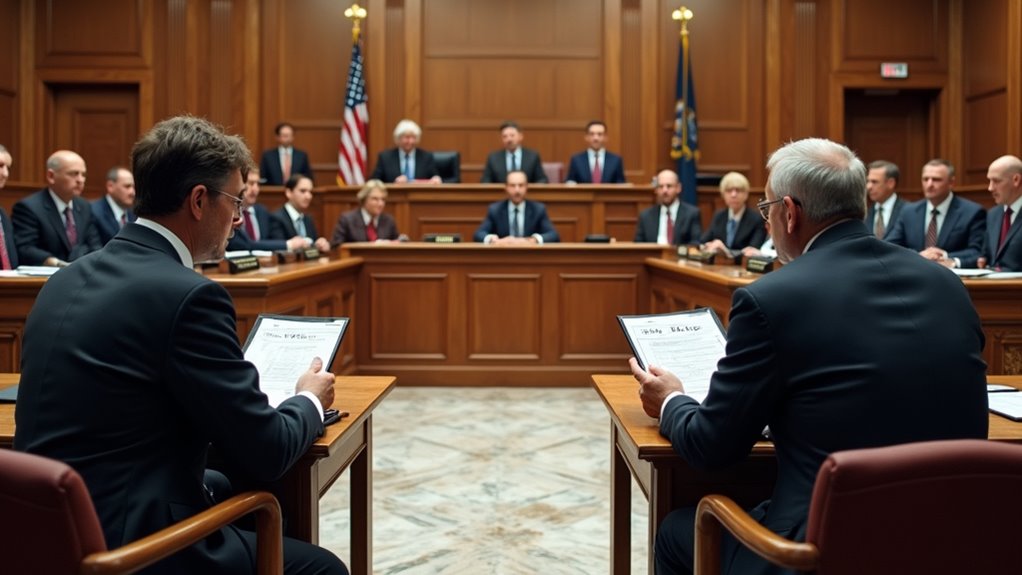
The number of peremptory strikes you receive depends entirely on the jurisdiction and the severity of the charges, and those numbers vary more than most practitioners realize. In federal death-penalty cases, you’ll get 20 strikes per side, while federal felonies grant the defense 10 and the government just 6.
State rules diverge sharply during voir dire. North Carolina gives each side 6 strikes in non-capital trials; West Virginia allows the accused 6 but limits prosecutors to only 2. Louisiana ties strikes to jury size, 3 for six-person panels, 6 for twelve-person panels. The differences in jury selection processes exemplify the complexities within the Georgia criminal trial process. Variations not only reflect regional practices but also impact the strategies employed by defense and prosecution.
Understanding these allocations isn’t optional, it’s essential. Every peremptory strike shapes your jury selection process, and mismanaging even one can alter trial outcomes. Research your jurisdiction’s specific rules before stepping into any courtroom.
Strike Strategy That Wins During Voir Dire
Winning voir dire isn’t about luck, it’s about deploying your strikes with surgical precision. Your jury impartiality evaluation should categorize every panelist before you spend a single strike.
| Category | Action | Purpose |
|---|---|---|
| Clearly biased | Challenge for cause | Preserve peremptory strikes |
| Subtly unfavorable | Peremptory strike | Remove risk you can’t prove |
| Neutral or favorable | Keep | Build your ideal panel |
Use open-ended questions to expose deep-seated attitudes, then document exact quotes to support cause challenges. Every successful cause challenge saves a peremptory strike for jurors who concern you but don’t meet the disqualification threshold.
Assign one team member to track nonverbal cues while you maintain eye contact and conversational rapport. You’ll extract more candid responses, and make sharper strike decisions.
The Order of Strikes in the Courtroom
Once voir dire questioning wraps up, the courtroom shifts to a structured strike sequence that unfolds in a specific order, and understanding that order can shape your entire selection strategy.
Challenges for cause come first. The government typically leads, followed by the defense. This sequence matters because cause removals reshape the available jury panel selection pool before anyone exercises peremptory strikes.
Peremptory challenges follow, often alternating between sides one strike at a time. The government strikes first, the defense responds, and the cycle continues until all seats are filled.
Some judges prohibit back strikes, meaning you can’t return to remove a previously passed juror. This constraint narrows your decision window considerably. You’ll want to know your judge’s specific procedures before voir dire begins, because strike timing becomes irreversible once the process starts.
Back Strikes, Blind Strikes, and Other Variations
You should know that not every court handles peremptory challenges the same way, back strikes, blind strikes, and other procedural variations can dramatically affect your jury selection strategy. A back strike lets you remove a previously accepted juror before the panel is sworn, but some jurisdictions prohibit the practice entirely, making it critical that you understand your court’s specific rules. These procedural differences aren’t minor technicalities; they shape how you allocate your strikes and can determine whether a verdict survives appeal.
Back Strike Restrictions
| Rule | Restriction |
|---|---|
| Timing cutoff | Before jury is sworn |
| Main-panel strikes on alternates | Prohibited |
| Alternate strikes on main panel | Prohibited |
| Denied back strike consequence | Per se reversible error |
| Preservation requirement | Identify specific juror on record |
You must preserve the issue by naming the targeted juror and objecting before swearing in. Failure to do so forfeits appellate review entirely.
Blind Strike Systems
Not every jurisdiction handles peremptory strikes through the sequential, back-and-forth process described above. In blind strike systems, you’ll mark your peremptory challenges simultaneously with opposing counsel, neither side sees the other’s selections until both submit their lists. The clerk then compares the sheets and seats the first eligible, non-struck jurors.
This approach eliminates the reactive strategy. You can’t adjust your strikes based on what the other side does, which forces you to prioritize your selections in advance. Overlapping strikes remain possible, producing outcomes neither side fully anticipates.
Blind strike systems don’t replace voir dire, they’re procedural variations governing how you exercise peremptory challenges after questioning concludes. You’ll still need to evaluate each juror for bias, and Batson protections against discriminatory strikes apply with equal force.
Court-Specific Procedural Variations
While blind strike systems represent one significant procedural variation, they’re far from the only way courts diverge in managing jury selection. The jury selection process, voir dire, looks dramatically different depending on where you’re practicing:
- Strike-and-replace systems: California judges typically question rotating panels of 6 to 18 prospective jurors, replacing struck members rather than questioning the entire venire simultaneously.
- Judge-controlled models: Some jurisdictions restrict attorney questioning entirely, permitting only narrowly tailored inquiries about direct prejudice.
- Individual voir dire: Connecticut grants attorneys the constitutional right to question each juror privately, reducing panel contamination.
- Mixed procedures: Massachusetts allows judges to combine panel and individual questioning, reserving private sessions for sensitive topics.
You’ll find that understanding these variations isn’t optional, it’s essential for effective advocacy.
How the Final Jury Is Seated After Strikes
Once both sides have exhausted their peremptory strikes and the court has ruled on all challenges for cause, the final jury isn’t handpicked, it’s what’s left. The jury screening procedure works by elimination, not selection. You’re left with the first remaining jurors in seating order, typically 12 in felony cases.
| Factor | What It Means for You |
|---|---|
| Seating order | The first eligible jurors in sequence become your jury |
| Strike exhaustion | Both sides must finish strikes before the panel locks |
| Jury size | 12 for felonies; 6, 12 for civil cases |
| Alternates | 1, 6 additional jurors seated as backups |
| Swearing in | The court administers the oath once the panel’s finalized |
Your jury reflects who survived the process, nothing more.
How Alternate Jurors Work in Jury Selection
Even after the final jury’s sworn in, the court’s work isn’t done, because alternate jurors serve as the built-in safeguard against mistrials. You’ll find them selected alongside regular jurors during voir dire, hearing identical evidence and testimony throughout the trial. Common grounds for a mistrial in court can arise from various factors, including juror misconduct or improper comments made during the trial. These situations highlight the crucial role of alternate jurors, as they can help maintain the integrity of the judicial process.
Here’s what you need to know about alternate jurors:
- They’re chosen during jury selection, not after trial begins
- They don’t deliberate or vote unless they replace a seated juror
- Courts often grant each side additional peremptory challenges specifically for alternates
- If unreplaced, they’re typically dismissed once deliberations start
You should understand that alternate jurors protect trial continuity when illness, emergencies, or misconduct removes a regular juror. Without them, you’d face costly mistrials. Most criminal courts seat one to six alternates, depending on case complexity and jurisdictional rules.
Get the Trial Defense You Deserve
Every phase of a criminal trial matters, from jury selection to closing arguments, and skilled representation can shape the entire outcome. At Cobb Defense in Marietta, GA, our experienced attorneys provide trusted Criminal Defense with skill, dedication, and a personalized strategy. Call (770) 627-3221 today and take the first step toward protecting your rights.
Frequently Asked Questions
Can a Juror Be Removed After Being Sworn In?
Yes, a juror can be removed after being sworn in, but only the judge, not the attorneys, controls that decision. You’ll see removal granted for illness, incapacity, disqualification, or serious misconduct. However, a judge can’t remove you simply for disagreeing with other jurors during deliberations. If you’re replaced, an alternate juror steps in. Leaving without authorization could expose you to contempt sanctions, so you shouldn’t walk away on your own.
How Do Attorneys Use Social Media During Jury Selection?
Attorneys review your publicly available social media profiles, Facebook, Instagram, X, LinkedIn, to uncover interests, affiliations, and attitudes that might signal bias. They’ll compare what you’ve posted online with your voir dire answers to test your candor and consistency. This research helps them craft targeted questions and conserve peremptory challenges by identifying concerning jurors early. However, they can’t send you friend requests, follow you, or contact you directly, ethical rules prohibit that interaction.
What Happens if Not Enough Impartial Jurors Are Available?
If the court can’t seat enough impartial jurors, it doesn’t simply proceed with a biased panel, it summons additional venire members until a qualified jury is assembled. You’ll see judges rely heavily on challenges for cause, excusing anyone whose impartiality raises reasonable doubt. When peremptory strikes and cause challenges still aren’t enough, the court must expand the pool or delay the trial to protect your Sixth Amendment right to an impartial jury.
Can a Defendant Waive Their Right to a Jury Trial?
Yes, you can waive your right to a jury trial in most jurisdictions, opting instead for a bench trial before a judge. You’ll typically need to make this choice knowingly and voluntarily, often in writing and on the record. In federal cases, you’ll also need the prosecutor’s consent and the court’s approval. Don’t underestimate this decision; you’re relinquishing a fundamental constitutional protection that directly shapes your trial’s outcome.
How Long Does Voir Dire Typically Last in Criminal Cases?
There’s no fixed duration, voir dire depends entirely on your case’s complexity. In a straightforward misdemeanor, you’ll typically finish jury selection in a few hours. However, if you’re facing serious felony charges, high-profile allegations, or extensive media coverage, expect the process to stretch across several days or even weeks. The number of challenges raised, the size of the jury pool, and each jurisdiction’s procedures directly shape how long you’ll spend selecting jurors.