You should recognize five types of nursing home abuse. Physical abuse, willful use of force causing injury, accounts for 29% of reported cases and leaves bruises, fractures, or restraint marks. Emotional abuse inflicts fear and distress through threats, isolation, or ridicule. Financial exploitation involves theft, forged checks, or coerced power-of-attorney changes. Sexual abuse covers non-consensual contact, comprising 7% of cases. Neglect, at 14%, means unmet basic needs. Knowing how each one hides matters next.
Key Takeaways
- Physical abuse involves willful use of force causing injury, shown through bruises, cuts, fractures, burns, or unexplained restraint marks, representing 29% of cases.
- Emotional and psychological abuse inflicts fear or distress through yelling, threats, shaming, and isolation, causing withdrawal, fearfulness, and social isolation.
- Financial exploitation includes theft or misuse of funds through forged checks, unauthorized transactions, altered beneficiaries, and coerced changes to wills or power-of-attorney.
- Sexual abuse, accounting for 7% of reported cases, covers non-consensual contact like assault, groping, harassment, and coercion, especially when consent is impossible.
- Neglect and abandonment, comprising 14% of cases, involve failing to meet basic physical, medical, and emotional needs or leaving dependents without planned care.
The recognized types of nursing home abuse
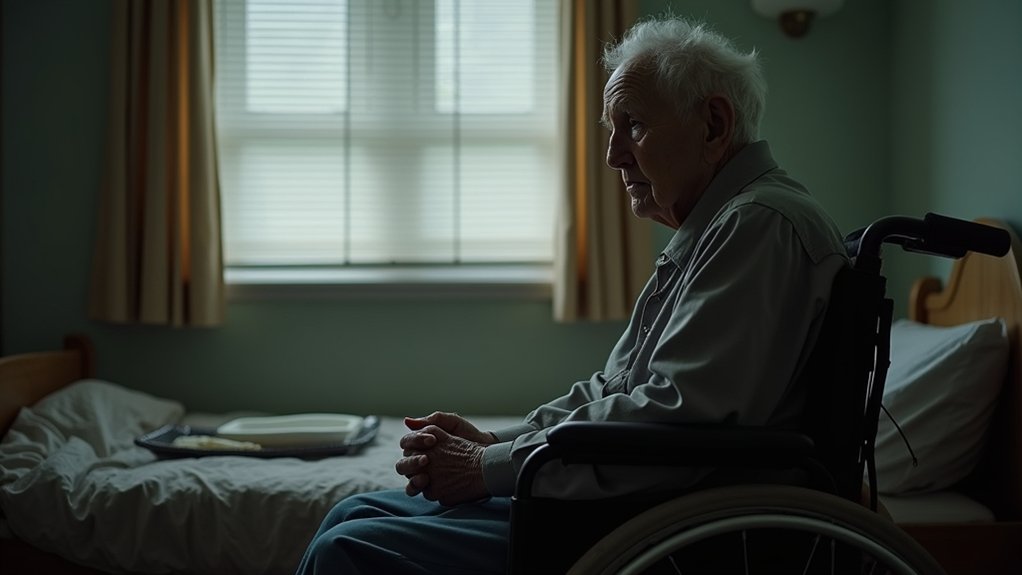
The recognized types of nursing home abuse fall within five commonly reported categories identified by the National Center on Elder Abuse: physical, emotional, sexual, and financial abuse, along with neglect. You should recognize that some sources expand this framework to include abandonment, self-neglect, and resident-to-resident abuse. Each category carries distinct indicators you can identify.
| Abuse Type | Core Definition | Reported Prevalence |
|---|---|---|
| Physical | Willful use of force causing injury | 29% |
| Financial | Misuse or theft of funds | 7% |
| Sexual | Non-consensual sexual contact | 7% |
You’ll find that neglect, failure to meet basic needs, and resident-to-resident abuse account for significant portions, at 14% and 22% respectively.
Physical abuse
Common visible indicators of physical abuse include the following:
Recognizing the visible signs of physical abuse is the first step toward protecting vulnerable residents from further harm.
- Bruises, cuts, and swelling.
- Fractures and burns.
- Unexplained injuries or restraint marks.
Because force is applied deliberately, physical abuse remains one of the most identifiable violations, reported at 29% of main abuse types in one review. If you spot these signs, document them and report them promptly to protect the resident.
Emotional and psychological abuse

Emotional abuse so often goes undetected because it rarely leaves visible marks. Emotional and psychological abuse involves the willful infliction of fear, distress, sadness, mental pain, or emotional harm through verbal or nonverbal conduct. You’ll find it in yelling, threats, intimidation, shaming, ridicule, belittling, and insulting language. It also includes repeatedly ignoring a resident, isolating them, or cutting off contact with friends and relatives. Watch for threats of punishment, threats of eviction, or pressure to pay for favors or attention. Since there aren’t unexplained bruises or fractures to point to, you must recognize behavioral indicators instead, such as withdrawal, fearfulness, sadness, or social isolation. The National Center on Elder Abuse identifies emotional abuse among its five commonly reported types, making documentation and prompt reporting essential.
Financial exploitation
Financial exploitation drains a resident’s assets. It constitutes the misuse, theft, or unauthorized use of a resident’s money, property, or personal funds. You should recognize that perpetrators often coerce or deceive residents into signing contracts, wills, or power-of-attorney changes, invalidating consent obtained through undue influence.
Watch for these statutorily recognized indicators:
- Unauthorized transactions, including forged checks, unauthorized bank or credit card use, and accounts opened without consent.
- Missing assets, such as stolen cash, valuables, or personal property.
- Unexplained account changes, including unusual withdrawals or altered beneficiary designations.
Financial abuse also encompasses misappropriation of funds, charging for services not requested or already included in the daily rate. Reviews attribute 7% of reported abuse to this category.
Sexual abuse

Sexual abuse is any non-consensual sexual contact or behavior. You must understand that this category encompasses sexual assault, rape, groping, fondling, unwanted touching, sexual harassment, and sexual coercion. It also includes forcing a resident to watch sexual acts or participate in sexual activity without consent.
Consent is absent when a resident hasn’t agreed or can’t agree because of incapacity. You should recognize that residents with cognitive impairments or diminished capacity can’t legally consent, so any sexual contact with them qualifies as abuse.
You should treat any sexual contact occurring without consent, or with someone unable to consent, as especially serious when evaluating potential violations. In one review of nursing home abuse patterns, sexual abuse accounted for 7% of the main reported types.
Neglect as a form of abuse
Neglect differs from other abuse types because it isn’t always a willful act of force. Unlike physical, emotional, financial, or sexual abuse, neglect is the failure to meet a resident’s basic needs. You should recognize neglect as a distinct category identified by the National Center on Elder Abuse, appearing in one review as gross neglect at 14% of main abuse types.
When you’re evaluating whether neglect has occurred, focus on unmet obligations:
- Physical needs: failing to provide adequate food, hydration, or medication.
- Health care needs: withholding necessary medical treatment or monitoring.
- Social and emotional needs: ignoring a resident’s need for interaction and support.
You’ll find abandonment closely related, leaving a dependent older adult without planned care, and both warrant prompt reporting.
Which types are hardest to detect
Emotional and financial abuse are the hardest forms to detect because they leave no visible marks. Emotional abuse, including yelling, threats, intimidation, shaming, and isolation, often occurs without physical injury, making it harder to detect than physical abuse. You’ll need to watch for behavioral signs: withdrawal, fearfulness, sadness, or sudden social isolation. Financial abuse is equally covert, surfacing only through unusual withdrawals, missing valuables, or unexplained account changes. By contrast, physical abuse frequently shows unexplained injuries or restraint marks, and sexual abuse involves identifiable non-consensual contact. When you can’t observe direct harm, you must scrutinize patterns, emotional distress and financial irregularities, rather than obvious wounds. Recognizing these subtle indicators protects residents whose incapacity or fear prevents them from reporting the abuse themselves.
Frequently Asked Questions
How Do I Report Suspected Nursing Home Abuse to Authorities?
You’ll report suspected nursing home abuse to your state’s Long-Term Care Ombudsman or Adult Protective Services, which are mandated to investigate under elder-protection statutes. If there’s immediate danger, call 911. You can also notify your state’s licensing agency and Medicare/Medicaid oversight authorities. Document what you’ve observed, injuries, financial irregularities, or emotional indicators, and preserve any evidence. Because you’re a concerned party, you’re protected when reporting in good faith under applicable whistleblower provisions.
What Legal Options Do Abuse Victims and Families Have?
You’ve got several legal options when abuse occurs. You can file a civil lawsuit seeking damages for physical, emotional, financial, or sexual harm your loved one suffered. You’re also able to report violations to state authorities, triggering regulatory investigations and penalties. If financial abuse involves forged documents or misappropriated funds, you can pursue restitution. Where non-consensual sexual contact occurs, you can press criminal charges. Consult an elder-abuse attorney promptly to preserve your claims.
Can I Sue a Nursing Home for Abuse?
Yes, you can sue a nursing home for abuse. When staff willfully use force causing injury, pain, or bodily harm, or commit emotional, financial, or sexual abuse, you’ve got grounds for a civil claim. You can pursue damages for documented harm like bruises, fractures, unauthorized withdrawals, or non-consensual contact. Since abuse falls under five recognized categories, including neglect, you’ll want thorough evidence of unexplained injuries, missing valuables, or restraint marks supporting your case.
How Can Families Help Prevent Nursing Home Abuse?
You can help prevent nursing home abuse by visiting frequently and at varied times, watching for warning signs like unexplained bruises, restraint marks, withdrawal, or unusual account withdrawals. You should review financial statements, question unauthorized document changes, and monitor medication use. Report suspected physical, emotional, financial, or sexual abuse immediately to facility administrators and state authorities. Don’t ignore subtle indicators, early intervention protects your loved one’s safety and legal rights.
What Should I Do Immediately After Discovering Abuse?
Ensure your loved one’s immediate safety first, then document everything you observe. Photograph any visible indicators, bruises, cuts, restraint marks, or unexplained injuries, and record dates, times, and statements. Report the abuse to facility administration and file a complaint with your state’s Adult Protective Services and long-term care ombudsman. If there’s imminent danger or you suspect sexual or physical assault, call 911. Preserve all financial records and don’t confront the suspected abuser directly.