After a crash, you’re required to exchange your full name, current address, phone number, driver’s license number, insurance company, and policy number. Photograph each vehicle’s license plate, make, model, color, damage, and the location’s road context. But watch what you say. Don’t admit fault, speculate about speeds or injuries, or discuss settlements at the scene. A simple apology can hurt your claim. Below, you’ll find exactly how to protect yourself at every step.
Key Takeaways
- Exchange full names, addresses, phone numbers, driver’s license numbers, and the owner’s name if different from the driver.
- Collect insurance company names, policy numbers, license plates, and each vehicle’s make, model, color, and year.
- Photograph documents, license plates, visible damage, and confirm all captured information is legible.
- Photograph each vehicle’s damage from multiple angles, plus location details like signs, signals, and skid marks.
- Never admit fault, speculate about causes or injuries, or discuss settlements with anyone beyond police, insurers, or attorneys.
What information you’re required to exchange

You must exchange specific identifying details with the other driver. Provide your full name, current address, and phone number, along with your driver’s license or permit number. If you’re not the vehicle’s owner, disclose the owner’s name. Share your insurance company’s name and policy number, and offer a photo of your insurance card when available. You must also exchange vehicle details: license plate, make, model, color, and year.
| Category | Required Details |
|---|---|
| Identification | Name, address, phone, license number |
| Insurance | Company name, policy number |
| Vehicle | Plate, make, model, color, year |
Document everything with photos of documents, plates, and visible damage. Collect passenger contact information when relevant to support any future claim.
How to exchange insurance details safely
To exchange insurance details safely, stick to the facts and nothing more. Get the other driver’s insurance company name and policy number, and share yours in return. When available, photograph their insurance card or proof of coverage for accurate documentation. Collect the basic information you’ll need to notify your insurer of the claim. Keep the exchange focused and factual. Resist any urge to discuss coverage, assign blame, or speculate about how the claim might play out. Those conversations belong with your insurer, not the scene. Don’t debate whose policy applies or estimate damages. Simply gather the details, confirm they’re legible in your photos, and move on. Staying disciplined here protects you from statements that could later complicate or undermine your claim.
What to photograph at the scene
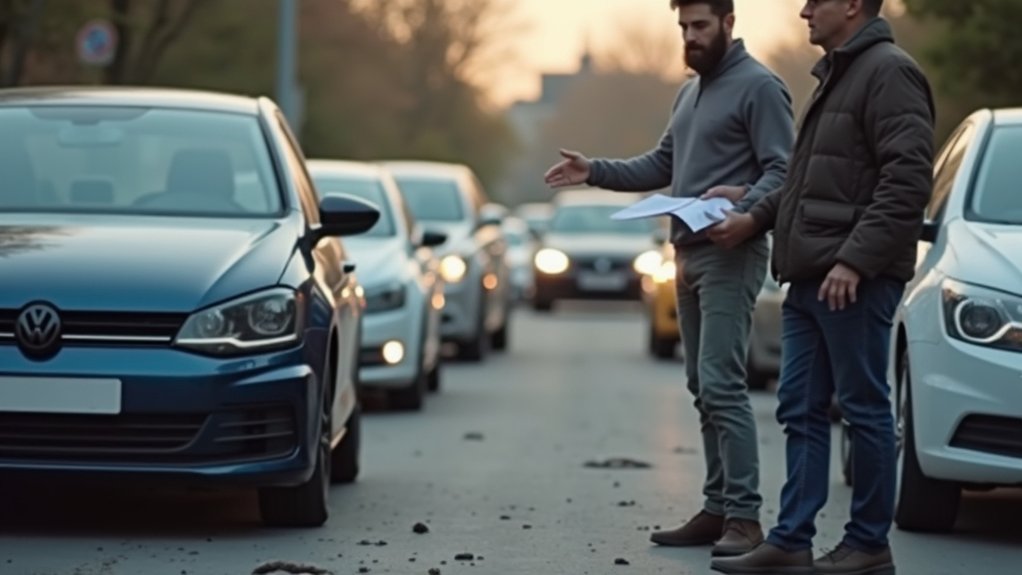
Photograph the license plate of every vehicle involved, along with each car’s make, model, color, and visible damage. Photographs often carry more weight than memory, so document the scene thoroughly before vehicles move or conditions change. Photograph your own vehicle’s damage and the other vehicles’ damage from multiple angles. Take clear images of the other driver’s insurance card, driver’s license, and vehicle documents when they’re offered. Record the exact location, road signs, traffic signals, skid marks, and the direction each vehicle traveled. Document weather conditions, road surface, and lighting. If police attend, photograph any report number or officer details provided officially. Note witnesses’ presence in your images when possible. These photos support your report or claim without requiring you to speculate or admit fault.
What not to say: admitting fault
Don’t admit fault or accept responsibility, even casually. A simple “I’m sorry” can later be twisted into an admission, so avoid apologies altogether. Don’t speculate about causes, speeds, maneuvers, or injuries; you can’t know the full picture in those first chaotic minutes, and guesses may be wrong. Stick to exchanging facts, names, insurance, license, and vehicle details, and leave conclusions to the investigators. Don’t discuss the crash with third parties beyond the police, your insurer, or your attorney. Avoid emotional statements or exaggerated versions of the impact. Finally, don’t accept quick offers or settlements on the spot without proper review. Let the evidence, not your words, tell the story.
What to do if the other driver won’t cooperate
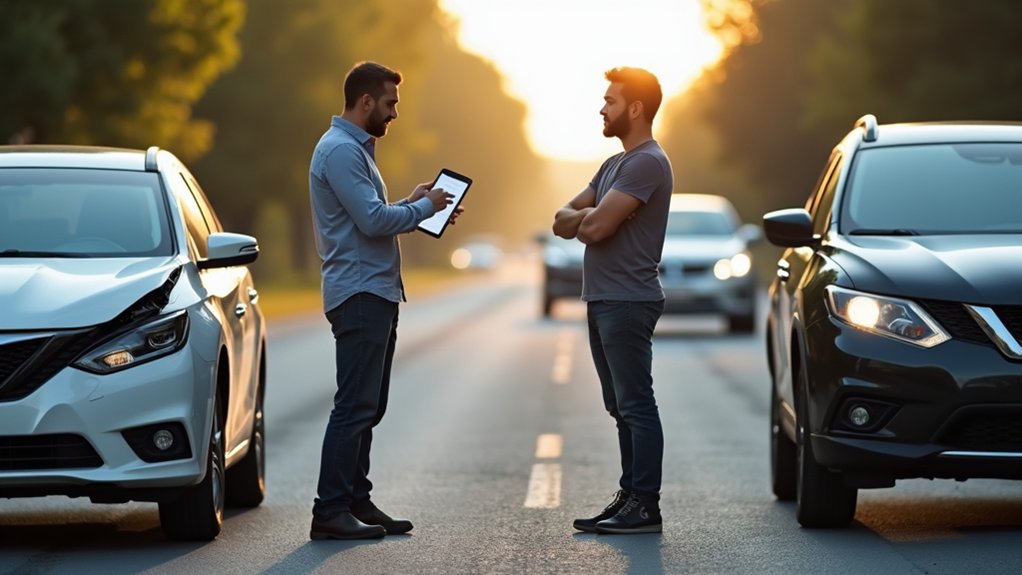
Protect yourself without escalating the situation when the other driver refuses to share information, drives off, or turns hostile. Don’t argue, chase, or demand cooperation. Instead, document everything you can from a safe distance. Photograph their license plate, vehicle make, model, and color, and note the direction they fled. Call the police immediately and report the refusal or hit-and-run, then request that an officer respond and file a report. Gather names and phone numbers of any witnesses who saw the incident. Record the exact date, time, and location. Notify your insurer promptly with these details. Avoid confronting an aggressive driver; stay in your vehicle if you feel unsafe. Your calm, thorough documentation protects your claim when the other party won’t participate.
Hit-and-run: what to do in Georgia
In Georgia, a hit-and-run is a criminal offense under O.C.G.A. § 40-6-270, and your response in the first minutes shapes both the investigation and your claim. Don’t chase the fleeing vehicle. Instead, capture whatever details you can: partial plate number, make, model, color, and direction of travel. Note the exact date, time, and location. Call 911 immediately and request an officer, since a police report becomes critical for your uninsured motorist coverage.
Photograph your vehicle’s damage, the roadway, and any debris left behind. Locate witnesses and record their names and phone numbers. Don’t speculate about the other driver’s identity or the impact’s cause. Report the incident promptly to your insurer, and preserve every document for your eventual claim.
Why an apology can hurt your claim
An apology can hurt your claim because insurers and opposing parties can twist those words into an admission of fault. When you say “I’m sorry,” you might intend simple courtesy, but that courtesy can be used against you. Don’t apologize, and don’t speculate about causes, speed, maneuvers, or injuries. You often don’t know the full picture in the moment, and adrenaline can distort your perception of what happened.
Stick to factual, objective exchanges: identification, insurance, and vehicle details. Leave assessments of blame to the police, your insurer, and your attorney. Avoid emotional opinions or exaggerated versions of the impact, and never accept a hurried settlement offer without proper review. Keep your statements neutral, and you’ll protect your claim from unnecessary damage later.
Frequently Asked Questions
How Long Do I Have to Report an Accident in Georgia?
I can’t give you a specific Georgia reporting deadline, since that detail isn’t covered in the information I have available. Generally, you’ll want to notify police promptly at the scene and report the accident to your insurer as soon as possible. Don’t delay, waiting can jeopardize your claim. For the exact statutory timeframe and legal requirements in Georgia, you should confirm directly with local authorities, your insurer, or a qualified attorney.
Can I File a Claim Without a Police Report?
Yes, you can file a claim without a police report, but you’ll strengthen your case by gathering solid documentation yourself. Collect the other driver’s name, address, phone, license number, insurance company, policy number, and vehicle details. Photograph the damage, plates, and scene. Note the date, time, location, weather, and witnesses’ contact info. Stick to objective facts, don’t admit fault, and report the claim promptly to your insurer.
Will Exchanging Information Affect My Insurance Premium?
No, simply exchanging information won’t affect your premium by itself. You’re legally required to share identifying, insurance, and vehicle details at the scene, and doing so carries no penalty. What can affect your premium is the claim itself, fault determinations, and your insurer’s assessment. So stick to exchanging facts, don’t admit responsibility, and don’t speculate about causes. Let your insurer and any investigation handle liability decisions that ultimately impact your rates.
Do I Need a Lawyer After a Minor Accident?
You don’t always need a lawyer for a minor accident, but you should consider one if there are injuries, disputed fault, or unclear coverage. At the scene, protect yourself: don’t admit fault, don’t speculate about causes or speed, and don’t accept quick settlements without review. Gather all identification, insurance, and vehicle details, plus witness and police information. If complications arise later, consult an attorney before signing anything or giving recorded statements.
How Long Does a Car Accident Claim Take to Settle?
There’s no fixed timeline, your claim can settle in weeks or stretch across many months, depending on injury severity, liability disputes, and your insurer’s process. To protect your position, don’t accept rushed offers or sign anything before you’ve reviewed it carefully. Keep your documentation organized, avoid speculating about fault or damages, and route communications through your insurer or attorney. If negotiations stall, you may need legal guidance to move forward.