Yes, you call 911 after a car accident in Georgia whenever anyone’s injured or killed, or when the damage looks like $500 or more. Georgia law requires you to notify local police by the quickest means, and 911 usually satisfies that immediate-notice duty. Don’t delay if you’re unsure about injuries or the damage threshold, just call. The resulting police report becomes an official record insurers rely on. Below, you’ll discover exactly why it matters.
Key Takeaways
- Georgia law requires calling 911 after a crash involving injury, death, or apparent property damage of $500 or more.
- Call 911 immediately if anyone is hurt or killed, and don’t delay when uncertain about injury or damage thresholds.
- A police report creates an official, contemporaneous record documenting vehicles, drivers, witnesses, road conditions, and how the crash unfolded.
- Insurers rely on the police report as a neutral, third-party account to establish fault and preserve evidence.
- If police don’t respond, gather photos, exchange information, collect witness details, and file a report with local police or Georgia DDS.
When you must call 911 in Georgia
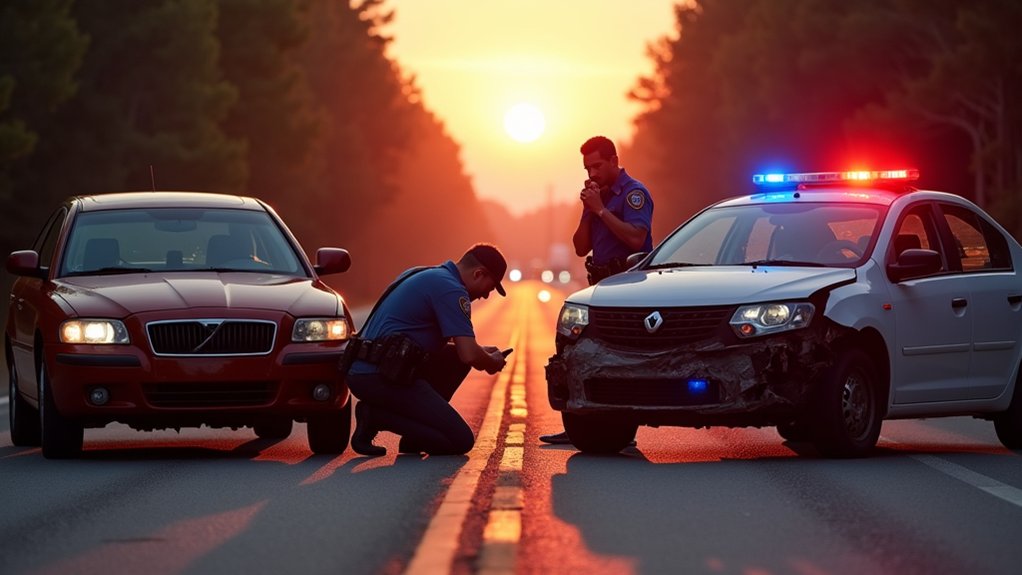
Georgia law requires you to call 911 after a car accident whenever injury, death, or apparent property damage of $500 or more occurs. You must notify local police by the quickest means of communication in these situations. Since 911 is the fastest method, it’s typically how you satisfy this immediate-notice requirement. Call right away if anyone, a driver, passenger, pedestrian, or bystander, is hurt or killed. You should also call when a vehicle blocks traffic, smokes, or creates unsafe conditions. If you’re uncertain whether someone’s injured or whether damage crosses the $500 threshold, don’t wait, call 911. Georgia’s Department of Driver Services directs you to notify the nearest law enforcement agency immediately under these conditions. When these statutory triggers apply, prompt reporting isn’t optional, it’s your legal duty.
Georgia’s legal duty to report an accident
Georgia law requires you, as a driver involved in a crash, to notify the local police department by the quickest means of communication when specific thresholds are met. The Georgia Department of Driver Services directs you to contact the nearest law enforcement agency immediately when any of these conditions exist.
| Reporting Trigger | What It Means for You |
|---|---|
| Injury | Any driver, passenger, or bystander is hurt |
| Death | A fatality occurs at the scene |
| Property damage of $500+ | Apparent damage meets the statutory threshold |
| Quickest means | 911 usually satisfies immediate notice |
When you meet any trigger, you must report promptly, not later.
What the police report includes
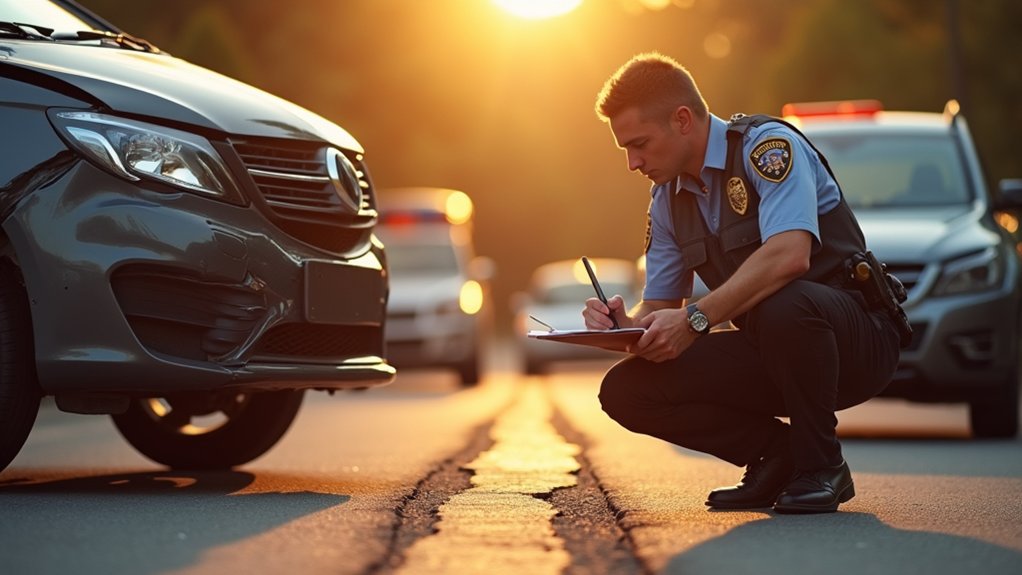
A police report includes an official, contemporaneous record of your collision that insurers and attorneys rely on when evaluating fault. When an officer responds, the report documents the date, location, and vehicles involved, along with the drivers’ and witnesses’ information. It captures immediate observations from the scene, road conditions, apparent injuries, and how the crash unfolded, before anyone moves vehicles or memories fade.
That documentation protects you if the other driver later disputes fault or downplays your injuries. Insurers commonly use these reports when assessing claims, so the details recorded on-scene can directly affect your recovery. By preserving evidence and firsthand accounts, the report gives you a reliable foundation to support your version of what happened.
Why the report matters for your claim
A police report strengthens your claim by creating an official record of the collision, and insurers commonly rely on that record when they evaluate a crash and assign fault. The report documents the date, location, vehicles involved, witnesses, and the officer’s immediate observations at the scene, details that can be hard to reconstruct later. A police response also preserves evidence before vehicles get moved or conditions change.
This matters most when the other driver disputes fault or downplays your injuries. With a contemporaneous record on file, you’re not left arguing your version against theirs. Instead, you’ve got a neutral, third-party account backing your position. If you’re pursuing an insurance claim in Georgia, that documentation can make the difference in how your case resolves.
What if police don’t come to the scene

If police don’t come to the scene, you still have options to protect yourself. Document everything you can: take photos of the vehicles, damage, road conditions, and license plates. Exchange information with the other driver, including name, contact, insurance, and vehicle details. Gather witness names and phone numbers before anyone leaves.
You can file a report directly at your local police department or through the Georgia Department of Driver Services when statutory thresholds apply, injury, death, or $500 or more in apparent damage. Filing promptly creates the official record insurers rely on later. Don’t assume minor damage means no report’s needed; repair estimates often climb once a mechanic inspects your vehicle.
Getting a copy of your Georgia crash report
Getting a copy of your Georgia crash report is straightforward. The responding officer typically provides a report number at the scene, so keep it, because you’ll need it to request your copy. Most Georgia agencies release crash reports through the investigating law enforcement department, whether that’s a local police department, county sheriff’s office, or the Georgia State Patrol. You can often request the report in person, by mail, or online, and a small fee may apply.
That official record documents the date, location, vehicles, witnesses, and the officer’s immediate observations. If you file an insurance claim or a fault dispute arises, having your report ready strengthens your position and helps preserve evidence before conditions change.
Minor accidents: do you still report
Yes, you should still report a minor accident, even a fender-bender that barely left a scratch, because minor damage often isn’t as minor as it looks. Georgia law requires reporting when apparent property damage reaches $500 or more, and that threshold is easy to cross once you account for hidden damage. A cracked bumper or dented panel can conceal costlier problems, and estimates frequently climb after a professional inspection.
Even when the damage seems trivial, filing a police report protects you. It creates an official record documenting the date, location, vehicles, and conditions at the scene. That record matters if the other driver later disputes fault, downplays injuries, or wants to handle things privately.
When in doubt, report. A few minutes now can prevent a costly dispute later.
Frequently Asked Questions
How Long Do I Have to Report a Georgia Accident?
You’ve got to report immediately, Georgia law requires you to notify local police by the quickest means of communication when a crash involves injury, death, or apparent property damage of $500 or more. Don’t wait; calling 911 from the scene usually satisfies this duty. Acting fast protects your record, preserves evidence, and supports later insurance claims. When you’re unsure whether the threshold applies, report anyway to safeguard your interests and document everything.
Can I Be Fined for Not Reporting a Crash?
Yes, you can face penalties for failing to report a qualifying crash. Georgia law requires you to notify local police by the quickest means when there’s injury, death, or apparent property damage of $500 or more. If you don’t meet this immediate-notice duty, you’re risking legal consequences and a weaker position later. Calling 911 promptly protects you, satisfies your reporting obligation, and creates the official record your insurance claim needs.
Does Calling 911 Automatically Raise My Insurance Rates?
No, calling 911 doesn’t automatically raise your insurance rates. Contacting emergency services simply creates an official record of the collision, it isn’t what insurers use to adjust your premiums. Your rates typically depend on factors like fault, claim history, and the severity of damage or injuries. In fact, a police report can protect you by documenting the scene accurately, especially if the other driver disputes fault or downplays what happened.
Should I Call 911 for a Parking Lot Accident?
You should call 911 for a parking lot accident if anyone’s injured, someone’s died, or the property damage reaches $500 or more, Georgia law requires prompt notice under those conditions. Even for minor fender-benders, calling protects you, since damage estimates often rise after inspection. You’ll also want police involvement if the other driver’s uninsured, impaired, uncooperative, or leaves the scene. When you’re uncertain, call anyway to document everything properly.
Can I File a Police Report Days After the Accident?
Yes, you can file a police report days later, but it’s not ideal. Georgia law requires you to notify police by the quickest means when there’s injury, death, or $500+ in damage, so immediate reporting is best. A later report still creates an official record for your insurance claim and fault analysis. However, delays can weaken your documentation, since evidence and scene conditions change once vehicles move. Report promptly whenever possible.