In a bench trial, you’re putting your case in front of a judge instead of a jury. That judge decides the facts and applies the law. You’ll still present evidence, call witnesses, and cross-examine the other side. The judge rules on objections, weighs credibility, and issues the verdict. You skip jury selection, but you can’t simply announce this choice; you’ll need a formal waiver. Below, you’ll see when this strategy can work in your favor.
Key Takeaways
- A bench trial is a non-jury trial where a judge, rather than a jury, decides the case.
- In a bench trial, the judge serves as both fact-finder and interpreter of law, weighing evidence and witness credibility.
- Bench trials follow standard trial steps, including testimony, exhibits, and cross-examination, but skip jury selection entirely.
- In jury trials, jurors resolve disputed facts while the judge handles legal questions, rulings, and jury instructions.
- Bench trials suit cases involving technical evidence or complex legal questions but lose the protection of multiple fact-finders.
What is a bench trial

A bench trial is a trial decided by a judge instead of a jury, with the judge acting as both fact-finder and interpreter of law. You’ll still present evidence, call witnesses, and argue legal questions, because a bench trial remains a full trial. The difference lies in who weighs what you offer. The judge carefully evaluates testimony, examines exhibits, and judges each witness’s credibility. Then the judge makes factual findings and applies the governing law to reach a decision. You may also hear it called a non-jury trial. If your case turns on complex legal issues that jurors might struggle to follow, you’ll want to understand this format clearly. You skip jury selection entirely, and one decision-maker controls both the facts and the law.
How a bench trial works
A bench trial works like any other trial, except one judge handles every function a jury would otherwise share. You’ll skip jury selection entirely, so your trial moves straight to presenting evidence.
You and the opposing side offer testimony, introduce exhibits, and cross-examine witnesses, just as you would before jurors. The judge rules on objections and decides what evidence counts, then weighs that same evidence and judges each witness’s credibility. There aren’t any jury instructions, because the judge doesn’t need them. Instead, the judge makes factual findings, applies the governing law to those facts, and issues the decision. That’s why you should frame every argument for one trained legal mind, not twelve laypeople weighing complex, unfamiliar concepts.
Why a defendant might choose a bench trial
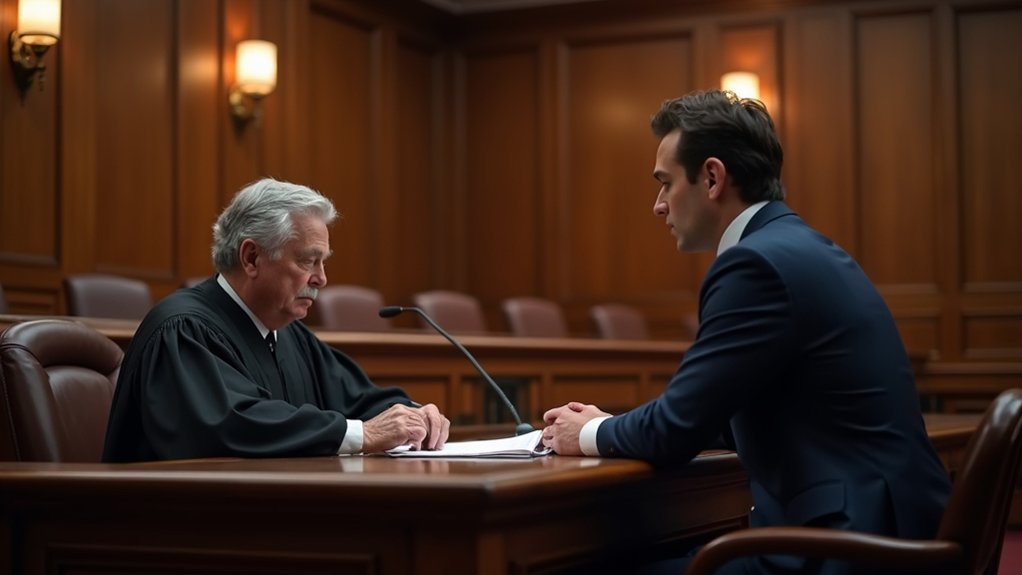
A defendant might choose a bench trial to have a judge, trained to separate legal arguments from emotional appeals, decide the case instead of gambling on how twelve laypeople will react to dense or technical evidence. If your defense turns on complex statutes or nuanced legal questions, you won’t have to simplify them for jurors. You’ll also skip jury selection, which can shorten proceedings.
You can’t simply announce your choice. In federal criminal court, you must waive your jury right in writing, the government must consent, and the judge must approve. Your waiver must be knowing and voluntary, so you’ll need to understand exactly what you’re giving up. State rules differ, so check your jurisdiction’s requirements before you decide. Weigh this strategic choice carefully with your attorney well before trial begins.
How a bench trial compares to a jury trial
A bench trial differs from a jury trial in who decides the facts. In a bench trial, you put both fact-finding and legal rulings in one judge’s hands. In a jury trial, jurors weigh the evidence and resolve disputed facts, and the judge rules on legal questions and instructs them on the law.
| Feature | Bench Trial | Jury Trial |
|---|---|---|
| Fact-finder | Judge | Jurors |
| Legal rulings | Judge | Judge |
| Jury selection | Not required | Required |
Either way, you’ll present evidence, argue legal issues, and receive a decision grounded in the governing law. If your case turns on complex legal matters that are hard to explain to jurors, a bench trial can work in your favor. If you want community judgment on credibility, a jury may serve you better.
What the advantages and disadvantages are

A bench trial’s main advantages are that you skip jury selection and present complex legal matters to someone trained to evaluate them. Its main disadvantage is that you lose the protection of multiple fact-finders. Both come from putting every decision in one judge’s hands.
The judge weighs testimony, assesses credibility, makes factual findings, and applies the law without needing jury instructions. If the judge doubts your witnesses, however, there’s no jury to balance that view.
Check your options first. In federal criminal cases, you’ll need a written, knowing, and voluntary waiver, government consent, and court approval. In federal civil cases, you waive a jury if you don’t make a proper written demand. State rules vary, so confirm yours.
When a bench trial is a smart strategic choice
A bench trial is a smart strategic choice when your case turns on technical evidence or complex legal questions. A judge already understands the governing law, so you won’t spend hours simplifying concepts that jurors might misread. You’ll also skip jury selection, which can shorten proceedings and reduce costs.
Consider a bench trial when your defense rests on legal nuance rather than emotional appeal, or when sympathetic facts favor your opponent. Follow the correct procedure to waive a jury. In federal criminal cases, you must sign a knowing, voluntary written waiver, obtain the government’s consent, and secure court approval. In federal civil cases, you can proceed without a jury if no party properly demands one or all parties consent. State rules vary, so check your jurisdiction’s requirements first.
How Cobb Defense advises clients on bench trial decisions
Cobb Defense advises clients on bench trial decisions by examining whether the case turns on facts a jury should weigh or on legal questions a judge is better equipped to resolve. We’ll review the evidence, the charges, and the judge assigned to your case, then explain how each format affects your defense. For federal charges, we’ll walk you through the waiver process: you must sign a written waiver, the government must consent, and the court must approve it. We’ll confirm your decision is knowing and voluntary, because once you waive a jury, you can’t easily reclaim it. We’ll also track jury-demand deadlines in civil matters so you don’t forfeit rights unintentionally. You make the final call, and we’ll give you the strategic analysis you need.
Choose the Right Trial Strategy
A bench trial puts the judge in the role of fact-finder instead of a jury, which can significantly affect how your criminal case is presented and decided. Cobb Defense handles Georgia criminal defense and can help you evaluate whether a bench trial or jury trial makes sense based on the charges, evidence, and circumstances of your case.
Call (770) 627-3221 or contact us to discuss your trial options.
Frequently Asked Questions
Does the Prosecution Have to Agree Before I Can Waive a Jury?
The requirements depend on whether your case is in state or federal court. In federal criminal cases, a defendant can waive a jury only with the government’s consent and the court’s approval, and the waiver must be in writing. State courts follow their own rules, so you should not assume the federal procedure applies to a Georgia state case.
Can I Withdraw My Jury Waiver After the Court Approves It?
Not necessarily. Once a jury waiver has been approved, whether you can withdraw it depends on the applicable court rules and the timing of your request. Courts may consider factors such as when the request is made, whether the other side would be prejudiced, and whether trial proceedings have already begun. If you want to change your decision, raise the issue with your attorney immediately.
Do I Have a Right to a Jury Trial for Misdemeanor Charges?
It depends on the offense and the potential punishment. Under the federal Constitution, the Sixth Amendment generally provides a jury-trial right for offenses considered serious, while petty offenses carrying no more than six months of imprisonment generally do not trigger that federal right. State constitutions and statutes may provide broader protections, so the rules applicable to your specific Georgia charge should be reviewed.
Can I Appeal a Judge’s Verdict After a Bench Trial?
Yes. A defendant can generally appeal a conviction following a bench trial, subject to the applicable deadlines and procedures. An appellate court reviews the trial record rather than conducting a new trial, and the standard of review depends on the issue being challenged. Legal errors, evidentiary rulings, and certain factual findings can be raised when the applicable preservation and appellate requirements are satisfied.
Are Bench Trial Rules the Same in State and Federal Court?
No. State and federal courts have different procedures governing jury waivers, consent, court approval, and trial practice. Federal criminal cases have specific requirements for waiving a jury, while Georgia state courts operate under Georgia’s Constitution, statutes, and procedural rules. Before choosing a bench trial, make sure you understand the requirements that apply in the court handling your case.