In Georgia, driving on public roads means you’ve already agreed to state chemical testing of your blood, breath, or urine. An officer can request a test when there are reasonable grounds to believe you’re impaired. That consent isn’t unlimited, and it doesn’t authorize physical force. If you refuse, you’ll face a license suspension of at least one year. Your refusal may affect your case in court. Below, you’ll see how your rights and defenses apply.
Key Takeaways
- Driving on Georgia roads counts as advance consent to state chemical testing of blood, breath, or urine when officers have reasonable grounds.
- Implied consent does not physically force testing; instead, refusal triggers statutory penalties, including a license suspension of at least one year.
- Officers must read the age-appropriate implied consent notice and specify which test is requested: blood, breath, or urine.
- Breath-test refusals cannot be used as evidence at trial, but blood-test refusals are generally admissible in Georgia courts.
- Reading the notice alone does not prove voluntary consent to a warrantless blood draw; courts assess each case for coercion.
What is the implied consent law in Georgia
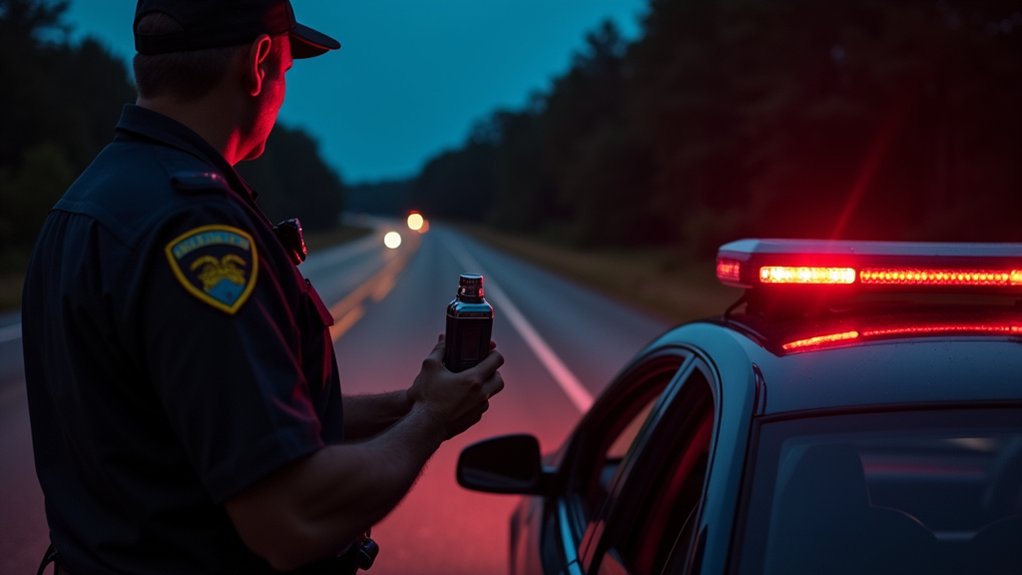
Georgia’s implied consent law is a rule that treats your decision to drive on the state’s highways as advance consent to state-administered chemical testing of your blood, breath, or urine under specified conditions. An officer may request a test when there are reasonable grounds to believe you’re under the influence. The law also covers certain crashes involving serious injury or death.
The officer requesting a test must read you the notice that matches your age and identify the specific test requested. Refusing doesn’t mean you’ll be physically forced to submit. Instead, refusal carries statutory consequences, including a potential license suspension of at least one year. However, implied consent doesn’t automatically authorize every test. A warrantless blood draw still raises separate constitutional questions about search and voluntary consent.
What you consent to by driving on Georgia roads
You consent in advance to a state-administered chemical test of your blood, breath, or urine by driving on a Georgia highway, but only under the conditions the statute specifies. An officer can request a test when they have reasonable grounds to believe you’re under the influence, or after certain crashes involving serious injury or death. The officer must read the notice that matches your age and identify the specific test requested.
Your consent isn’t unlimited. It doesn’t physically compel testing. Instead, refusing triggers statutory consequences, including license suspension. It also doesn’t override constitutional protections. A blood draw is a search, and hearing the implied-consent notice doesn’t by itself establish that you voluntarily agreed to a warrantless draw. Courts examine the totality of circumstances.
What happens when an officer reads the implied consent notice

You face a decision with legal consequences after the officer reads the implied consent notice. The officer must read the version that matches your age and name the specific test requested: blood, breath, or urine. You don’t receive Miranda warnings before you decide.
The notice tells you:
- Refusal carries a penalty. Refusing the state test can trigger a license suspension of at least one year.
- Your result matters. If you’re 21 or older, a result of 0.08 grams or more may lead to suspension. If you’re under 21, the threshold is 0.02 grams.
- You can get your own test. After you complete the state test, you can get an independent test from qualified personnel you choose, at your own expense.
What the penalties for refusing a chemical test are
Refusing the state-administered chemical test triggers statutory consequences that can affect both your license and your criminal case. Refusal also doesn’t stop the test from being “forced.”
Under the implied consent notice, refusal can lead to a license suspension of at least one year. Georgia DDS also says that if you’re convicted of a first DUI, a refusal suspension makes you ineligible for a limited driving permit. This administrative penalty runs separately from your criminal charge, so you can lose your license even if your DUI case goes well.
Refusal can also become trial evidence. Georgia courts bar breath-test refusal evidence under the state constitution’s privilege against self-incrimination, but blood-test refusal evidence generally remains admissible under current law. Prosecutors may use that refusal against you.
How Georgia’s implied consent compares to other states

Georgia’s implied consent law differs from other states’ laws because it treats breath-test and blood-test refusals differently and requires a case-specific review of warrantless blood draws. Every state has an implied consent law, but you shouldn’t assume another state’s rules apply to a Georgia DUI stop.
| Issue | Georgia Rule | What It Means for You |
|---|---|---|
| Breath-test refusal | Inadmissible under state constitution | Prosecutors can’t use it at trial |
| Blood-test refusal | Generally admissible | Your refusal may be used against you |
| Warrantless blood draw | Requires case-specific reasonableness review | The notice alone doesn’t prove consent |
Georgia’s constitutional privilege against self-incrimination drives these distinctions, so breath and blood refusals receive different treatment. Courts are still refining blood-refusal rules after *State v. Dias*, so the law may shift. If you’ve driven elsewhere, don’t rely on what you learned there. Have a Georgia DUI attorney review your specific stop.
Why understanding implied consent matters before a DUI stop
Understanding Georgia’s implied consent rules ahead of time matters because you’ll have only moments to decide whether to submit to a state-administered chemical test, and advance knowledge helps you make an informed choice under pressure. The officer must read the notice matching your age and identify the requested test. The stakes include:
- License consequences: Refusing can trigger at least a one-year suspension, and DDS says a refusal makes you ineligible for a limited driving permit after a first DUI conviction.
- Trial evidence: Blood-test refusal evidence generally remains admissible, while Georgia’s Supreme Court bars breath-test refusal evidence.
- Your rights: After taking the state test, you can seek independent testing at your own expense from qualified personnel you choose.
Understanding these distinctions helps you protect both your license and your defense.
How Cobb Defense defends clients in implied consent cases
Cobb Defense defends clients in implied consent cases by examining whether the officer’s chemical test request met Georgia’s legal requirements. We check whether the officer had reasonable grounds, read the notice matching your age, and identified the specific test requested. If you submitted to a blood draw, we assess whether your consent was truly voluntary, since reading the implied-consent notice doesn’t establish consent by itself. We look for coercion, promises, or a withdrawn agreement that could support suppressing the result.
If you refused, we treat the administrative license suspension and your criminal case as separate fights. We’ll challenge breath-refusal evidence under Georgia’s constitutional privilege against self-incrimination and evaluate any available grounds to contest blood-test refusal evidence. We also confirm that officers honored your independent-testing right.
Protect Your DUI Rights
Georgia’s implied-consent rules can create separate consequences for your driver’s license and your DUI case, making the decisions you make after an arrest especially important. Cobb Defense handles DUI defense in Georgia and can review the testing procedure, implied-consent notice, refusal issues, and any resulting license suspension.
Call (770) 627-3221 or contact us to discuss your DUI arrest and next steps.
Frequently Asked Questions
Do I Have to Answer Questions or Take Field Sobriety Tests During a Stop?
Georgia’s implied-consent law concerns state-administered chemical testing after a qualifying DUI arrest, not every question or roadside exercise. You generally are not required by the implied-consent statute to perform field sobriety exercises, although refusing a request does not necessarily prevent an officer from arresting you based on other evidence. The consequences of refusing a state-administered chemical test are different and can include driver’s-license consequences.
Can I Request an Independent Chemical Test After Taking the State’s Test?
Yes. Georgia law provides a right to an independent chemical test after you submit to the state-administered test, subject to the statutory requirements. The independent test is performed by qualified personnel of your choosing and at your own expense. If you want one, clearly request it and follow through promptly because the circumstances surrounding the request and opportunity to obtain testing can become important later.
Is an Officer Required to Read Miranda Rights Before Requesting a Chemical Test?
No. Miranda warnings are not generally required before an officer requests a state-administered chemical test. Georgia’s implied-consent process involves a separate statutory notice that informs the driver about the requested testing and certain consequences of refusing. Miranda and implied consent therefore address different legal issues and should not be treated as interchangeable.
Can I Withdraw Consent After Initially Agreeing to a Blood Test?
You can communicate that you no longer consent, but withdrawing consent can have legal consequences and does not necessarily stop officers from obtaining a warrant or otherwise proceeding under applicable law. Georgia courts evaluate the circumstances surrounding consent to blood testing, including whether consent was voluntary. If you initially agree and later withdraw, the precise timing and circumstances can become important to the admissibility of the resulting evidence.
Can My Refusal to Take a Breath Test Be Used Against Me at Trial?
For a state-administered breath test, Georgia’s constitutional protection generally prevents the State from introducing the driver’s refusal as evidence of guilt. The Georgia Supreme Court has maintained the protection recognized in Elliott v. State for breath-test refusals. The rule is different for blood-test refusals: State v. Dias did not extend that constitutional protection to blood-test refusal evidence, and Georgia courts continue to address blood-refusal issues under the applicable circumstances.