An injunction for protection is a court order that legally prohibits your abuser from contacting, approaching, or threatening you. It can require them to stay away from your home, workplace, and children’s schools while surrendering any firearms. Courts issue these orders when you’ve experienced physical harm, assault, sexual violence, or credible threats of imminent danger. Understanding the different types of injunctions and the filing process will help you secure the protection you need.
Legal Definition of Domestic Violence Under State Law

When you’re seeking a domestic violence injunction, understanding how your state legally defines domestic violence is essential to your case. Statutory definitions vary by jurisdiction but typically require an act or pattern of acts causing physical harm, bodily injury, assault, or sexual assault against a covered person.
Your state’s definition likely includes threats that reasonably place you in fear of imminent physical harm. Many jurisdictions also recognize stalking, harassment, and coercive behavior within their domestic violence frameworks. Verbal disagreements or shouting matches, even when involving insults or heated exchanges, do not automatically qualify as domestic violence unless there is a threat of imminent physical harm.
These definitions carry significant criminal penalties and determine your eligibility for protection. Importantly, defensive measures you take to protect yourself are typically excluded from these definitions. Understanding whether your situation involves a single incident or pattern of abuse affects both your injunction petition and potential criminal proceedings. Protected persons may also seek orders preventing the abuser from harming or interfering with pets or animals in their possession.
Types of Injunctions Available for Domestic Violence Victims
Although domestic violence injunctions serve as the primary protective tool for victims of family or household violence, several other types of civil protection orders exist to address different relationship contexts and circumstances.
If you’re experiencing violence from a romantic partner you’ve never lived with, you may qualify for a dating violence injunction. When specific sexual offenses occur outside family relationships, a sexual violence injunction provides protection. Repeat violence injunctions address multiple incidents involving neighbors or coworkers, while stalking injunctions cover harassment without requiring domestic ties.
Each injunction type offers distinct relief. Domestic violence orders typically include economic relief provisions, temporary custody arrangements, and firearm restrictions. These civil protections remain available regardless of criminal proceedings, and self defense claims raised by respondents don’t automatically prevent courts from issuing protective orders. In Florida, these injunctions are referred to as Petition for Injunction Against Domestic Violence and can result in the respondent losing visitation rights. When seeking these protections online, victims may occasionally encounter website access issues if site owners are using security plugins like Wordfence, which is installed on over 5 million WordPress sites.
How Courts Determine Immediate Danger
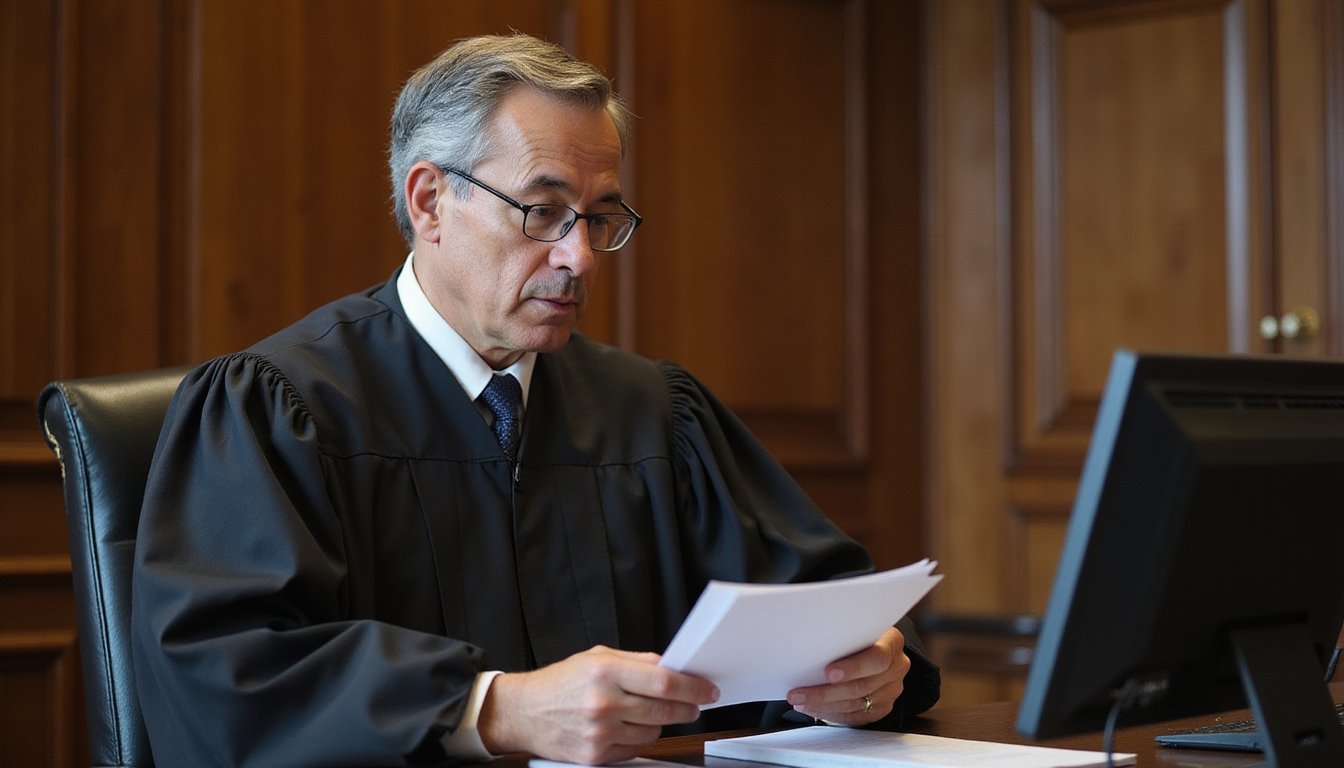
How do courts decide whether you face immediate danger requiring emergency protection?
Judges conduct a thorough assessment of dangerousness by examining specific risk factors. They evaluate your abuser’s history of violence, including prior threats, stalking, physical abuse, and coercive control patterns. Recent incidents carry significant weight, violence or threats occurring within days or weeks of your petition strongly support an immediate danger finding.
Courts also consider credibility of evidence through documentation: police reports, prior protective orders, medical records, and witness statements. Lethality indicators like strangulation history, access to firearms, weapons use during arguments, and murder-suicide threats elevate risk assessments considerably.
Violations of previous court orders demonstrate your abuser’s disregard for legal boundaries, signaling continued danger. Geographic proximity and ongoing harassment confirm the threat remains current, not historical. The judge will also evaluate whether the respondent has threatened to conceal or kidnap your child, which weighs heavily in determining immediate danger. If the judge finds immediate danger exists, a Temporary Injunction is entered and remains effective until the hearing, which must occur within 15 days.
Temporary Ex Parte Injunctions and Emergency Protections
Once a judge determines you face immediate danger, the court can issue a temporary ex parte injunction, an emergency protective order granted without your abuser’s presence or advance notice. This order typically remains effective for 15 to 20 days until your full hearing. The court grants this emergency relief when you demonstrate reasonable fear of violence or evidence of past victimization.
Key Emergency Protections You May Receive:
- Exclusive home occupancy, You can obtain sole property rights to the shared residence, immediately excluding the respondent from the premises.
- Temporary custody arrangements, Courts may award you up to 100% time-sharing with supervised exchanges at designated safe locations. The respondent can be barred from seeing shared children until the court modifies or dissolves the order.
- Comprehensive no-contact provisions, The order prohibits all direct, electronic, and third-party contact between you and the respondent.
These protections become enforceable immediately upon service. Violation constitutes respondent punishment through criminal contempt charges, reinforcing the order’s protective authority.
Comprehensive Protections Granted in Final Injunctions

A final domestic violence injunction can require the respondent to maintain a specific distance from your home, workplace, school, and other locations you frequent, often 500 feet or more. The court may also order the respondent to complete mandatory counseling programs, including batterer’s intervention or substance abuse treatment, as a condition of the injunction. Additionally, Florida law authorizes the judge to require the respondent to surrender all firearms and ammunition and prohibits them from purchasing or possessing weapons while the order remains in effect. You should maintain a copy of the Order or Final Judgement at all times to present to law enforcement if violations occur. You may also bring witnesses or evidence to your scheduled court hearing to support your claims made in the petition filed with the Court.
Stay-Away Order Requirements
When a court grants a final domestic violence injunction, the stay-away provisions establish critical boundaries that the respondent must respect. These orders typically require the respondent to maintain a specified distance, often 50 to 500 yards, from you, your home, workplace, and school. The residential property provisions can mandate that the respondent vacate a shared residence, even if jointly owned.
Key stay-away requirements include:
- Geographic exclusion zones covering your residence, workplace, children’s schools, and relatives’ homes
- No-contact provisions prohibiting communication through phone, text, email, social media, or third parties
- Extended protections for children’s daycare, medical appointments, and supervised visitation locations
The consequence of violations is serious; police can arrest the respondent upon probable cause, and courts may extend or modify the injunction accordingly. Additionally, the injunction may include provisions requiring the respondent to surrender guns, firearms, ammunition, or body armor to ensure your safety. Final protective orders can remain in effect for up to 2 years and may be renewed if continued protection is necessary.
Mandatory Counseling and Firearms
Beyond stay-away provisions, final domestic violence injunctions often include two additional protective measures that directly address respondent behavior and safety risks: mandatory counseling requirements and firearm restrictions.
Courts can order respondents to complete batterer’s intervention programs, anger management, substance abuse treatment, or parenting classes, paid entirely by the respondent. Compliance monitoring occurs through probation officers or proof-of-completion requirements submitted to the court.
Final injunctions also prohibit firearm possession and require surrender of all weapons to law enforcement. Federal law under 18 U.S.C. § 922(g)(8) reinforces these state-level bans, and violations are entered into background-check databases. After issuing a final order, the court directs police to include the respondent’s information in the domestic violence registry.
Violation consequences for either provision are serious. You can face contempt charges, arrest, and criminal prosecution. These combined measures aim to reduce your risk while holding the respondent accountable for behavioral change. While legal representation is not mandatory, consulting with an attorney is recommended to understand the long-term consequences of the final judgment for both parties involved.
Stay-Away and No-Contact Order Requirements
When a court issues your domestic violence injunction, it will specify exactly how the respondent must stay away from you and what forms of contact are prohibited. Stay-away provisions typically require the abuser to maintain a specific distance, often 100 to 500 feet, from your home, workplace, school, and any other locations you regularly visit. No-contact orders prohibit all communication methods, including phone calls, text messages, emails, social media contact, and indirect contact through third parties. If the respondent violates these stay-away or no-contact provisions, police may arrest the abuser or take other enforcement action.
Prohibited Contact Methods
Although a domestic violence injunction may contain various protective provisions, the prohibited contact methods represent some of the most critical restrictions you’ll need to comprehend and adhere to. Courts broadly define prohibited contact to encompass virtually all communication channels, whether direct or through third parties.
Common prohibited contact methods include:
- Direct communication, phone calls, texts, emails, social media messages, handwritten notes, and in-person conversations
- Indirect contact, using friends, family members, or acquaintances to relay messages or deliver gifts on your behalf
- Nonverbal signals, gestures, physical signaling, or any deliberate attempt to communicate with the protected person
Courts may implement electronic monitoring to guarantee compliance. While emergency communication exceptions exist in limited circumstances, you must typically work through attorneys or court-approved channels. Violations carry serious criminal penalties regardless of the method used.
Protected Location Restrictions
Protected location restrictions form the geographic backbone of most domestic violence injunctions, complementing the prohibited contact methods by establishing physical boundaries you must not cross. Courts typically require you to maintain a specified distance, often 50 to 300 yards, from the protected person’s residence, workplace, school, and children’s locations. These security measures operate 24/7 and extend to parking lots, entrances, and surrounding areas.
| Protected Location Type | Common Examples |
|---|---|
| Residential | Home, shelters, family members’ residences |
| Daily Activities | Workplace, schools, daycare, places of worship |
Courts address privacy concerns by customizing location lists to include gyms, stores, and venues where past stalking occurred. You can violate these restrictions simply by entering the prohibited perimeter, no verbal contact or threatening behavior required.
Firearm Restrictions and Weapon Surrender Mandates
Firearm restrictions represent one of the most momentous aspects of a domestic violence injunction, as both federal and state laws impose strict prohibitions on gun possession once a qualifying protective order takes effect. Under 18 U.S.C. § 922(g)(8), you’re prohibited from possessing firearms if your order includes a credible threat finding or explicitly bars physical force.
State firearm surrender requirements vary greatly. Some jurisdictions mandate immediate relinquishment regardless of circumstances, while others condition surrender on specific evidence requirements, such as proof that you used, possessed, or threatened a firearm during the incident.
Key points you should understand:
- Federal violations carry fines and imprisonment
- State violations trigger separate criminal charges and contempt findings
- The Supreme Court upheld these restrictions as constitutional in 2024
Child Custody and Parenting Plan Provisions
When a domestic violence injunction involves children, courts possess broad authority to reshape custody and parenting arrangements to safeguard both you and your child from ongoing harm. A temporary custody transfer may grant you sole physical and legal custody, suspending existing time-sharing schedules immediately. Courts apply the “best interests of the child” standard, often creating rebuttable presumptions against awarding custody to abusive parents.
| Provision Type | Protective Measure | Purpose |
|---|---|---|
| Decision-Making | Sole authority to protected parent | Prevents coercive control |
| Visitation | Supervised or restricted contact | Guarantees child safety |
| Communication | Written platforms only | Limits harassment |
| Exchanges | Neutral locations required | Prevents confrontation |
| School Access | Abuser barred from campus | Protects daily environment |
Long term custody modifications require compliance with treatment programs and demonstrated safety improvements before courts expand the abusive parent’s access.
Filing Process and Required Documentation
Because time-sensitive protection is often critical, courts have streamlined the filing process to help you obtain a domestic violence injunction quickly, often within the same day you submit your petition. You’ll file your petition in civil or family court, typically in the county where you reside, where the respondent lives, or where the abuse occurred.
Essential steps for filing:
- Complete standardized petition forms describing specific acts of domestic violence with dates, times, and locations
- Provide photo identification for information verification and include detailed respondent data such as address, workplace, physical description, and vehicle information
- Sign the petition under oath and submit it to the clerk for immediate judicial review
Courts allow petition amendments if you need to correct or add information before your hearing.
Working With a Family Attorney for Your Injunction Case
Filing your petition marks the first step, but traversing the hearing process and acquiring full protection often requires skilled legal guidance.
A family attorney analyzes state domestic violence statutes to match your circumstances to legal standards. Your attorney develops an extensive hearing strategy that anticipates defenses like denial or minimization of abuse. Counsel prepares you for cross-examination and credibility challenges while organizing corroborating documentation.
Effective evidence presentation drastically impacts case outcomes. Your attorney identifies and structures medical records, police reports, photographs, and digital communications to support your claims. This preparation often results in stronger, more detailed order provisions.
When your injunction intersects with custody, divorce, or immigration matters, representation becomes critical. An attorney advocates for clear domestic violence findings that affect custody presumptions and guarantees proper safety protocols during court-connected services.
Frequently Asked Questions
How Long Does a Temporary Injunction Last Before the Final Hearing?
Your temporary injunction typically lasts up to 15 days before the final hearing. Florida law sets this reasonable timeframe to protect you while allowing court scheduling of a full evidentiary hearing. The court can extend this period for good cause, such as delays in serving the respondent. Your temporary order remains fully enforceable until the judge conducts the final hearing and decides whether to grant a permanent injunction.
Can I Modify an Injunction After It Has Been Granted?
Yes, you can request to modify an injunction after it’s been granted. Either party may file a motion to change the order, whether you’re seeking modifying terms or extending duration. You’ll need to file a formal motion with supporting documentation and serve the other party. The court will evaluate whether substantial changed circumstances justify the modification. If you’re the restrained party, you’re typically limited to filing once every 12 months.
What Happens if the Abuser Violates the Injunction Order?
If the abuser violates the injunction order, you should contact law enforcement immediately. Arrest consequences are significant; officers can arrest the violator without a warrant based on probable cause. Criminal charges violation of an injunction typically constitutes a first-degree misdemeanor, carrying up to one year in jail and $1,000 in fines. Repeated or serious violations can escalate to felony charges, potentially resulting in five years’ imprisonment.
Will My Injunction Be Valid if I Move to Another State?
Yes, your injunction remains valid when moving state. Under the federal Violence Against Women Act, every state must enforce your protection order as if it issued the order itself. You don’t need to worry about jurisdiction concerns, federal law specifically prevents your protection from disappearing at state lines. While registration isn’t required, you should carry a certified copy of your order and consider filing it with local law enforcement for faster verification.
Can the Respondent Contest or Appeal the Injunction Decision?
Yes, the respondent can contest the injunction. They may pursue challenging injunction decision through a motion to dissolve or modify in the trial court, citing changed circumstances or insufficient evidence. Alternatively, they can file a notice of appeal within strict deadlines, often 30, 45 days, when appealing injunction order based on legal errors, procedural issues, or unsupported findings. You should understand that appeals are costly, time-consuming, and rarely result in outright dismissal.