Drug trafficking is legally defined as the manufacture, distribution, or possession of controlled substances with intent to distribute. Under federal law (21 U.S.C. § 841), prosecutors must prove you knowingly intended to distribute drugs. Florida’s approach is stricter, under Fla. Stat. § 893.135, you’ll face trafficking charges based on drug weight alone, with no intent required. The differences between federal and state laws dramatically affect your charges, penalties, and available defenses.
What Is Drug Trafficking Under Federal Law?

Under federal law, drug trafficking is defined primarily by 21 U.S.C. § 841, which makes it a crime to knowingly manufacture, distribute, or possess controlled substances with the intent to distribute them. This statute covers both natural and synthetic narcotics, including cocaine, heroin, methamphetamine, and marijuana.
The drug trafficking legal definition extends beyond completed sales. You don’t need to finalize a transaction to face charges, federal prosecutors can establish intent through quantity, packaging materials, scales, communications, or cash found during seizures. Attempts and conspiracies also carry full liability under this framework.
You should understand that federal enforcement prioritizes distribution rings, manufacturing operations, and large-scale shipments, making these charges among the most aggressively prosecuted in the criminal justice system. Because federal penalties are often more severe than state-level consequences, anyone facing these charges should seek experienced legal representation immediately to build an effective defense strategy.
How Do Federal and Florida Trafficking Laws Differ?
When you’re facing drug trafficking charges, understanding the distinction between federal and Florida law can shape your entire defense strategy. Federal prosecutors must typically prove you knew about and intended to distribute the controlled substance, while Florida’s statute under Section 893.135 triggers trafficking charges based primarily on the weight of the drugs in your possession, regardless of whether you intended to sell them. This critical difference means you could face Florida trafficking charges for simply possessing 28 grams of cocaine, even if federal prosecutors wouldn’t pursue the same case without evidence of distribution intent. Federal cases generally involve interstate or international activities and are investigated by agencies like the DEA and FBI, which have broader resources than state-level law enforcement.
Federal Intent Requirements
Federal drug trafficking prosecutions hinge on a single critical element: intent to distribute. Under 21 U.S.C. § 841, prosecutors don’t need to prove you actually sold drugs, they must establish you possessed them with distribution intent.
Understanding federal intent requirements reveals how prosecutors build cases using circumstantial evidence. If you’re caught with quantities exceeding personal use, scales, packaging materials, large cash amounts, or multiple phones, the government will argue these indicators prove intent beyond reasonable doubt.
The practical reality shifts the burden to you. You’ll need to explain why those circumstantial indicators don’t suggest distribution activity. Federal prosecutors possess broad charging discretion, meaning nearly any drug case meeting quantity thresholds becomes subject to federal prosecution, even without testimony from purchasers or evidence of completed transactions. With the average sentence for drug trafficking reaching 82 months of incarceration, the stakes of failing to overcome these inferred-intent arguments are severe. In the context of building a defense strategy, you might wonder if drug trafficking charges can drug trafficking charges be dropped due to insufficient evidence. It’s crucial to gather any available evidence that undermines the prosecution’s claims, as mere allegations won’t withstand scrutiny in court.
Florida Weight-Based Charges
While federal prosecutors must prove intent to distribute, Florida’s trafficking statute operates on a fundamentally different, and far more aggressive, principle: weight alone determines the charge.
If you’re caught with 28 grams of cocaine, you’re facing drug trafficking charges, regardless of whether you intended to sell a single gram. Florida eliminates the intent element entirely. The weight triggers automatic first-degree felony classification with mandatory minimum sentences judges can’t override.
Here’s where it gets ruthless: Florida counts everything. Cutting agents, filler materials, even packaging contribute to the total weight. Three grams of methamphetamine mixed with 11 grams of creatine equals 14 grams, crossing the trafficking threshold. You’re not charged based on pure drug content. You’re charged on combined weight, making Florida’s system one of the nation’s strictest.
How Is Drug Trafficking Different From Possession?
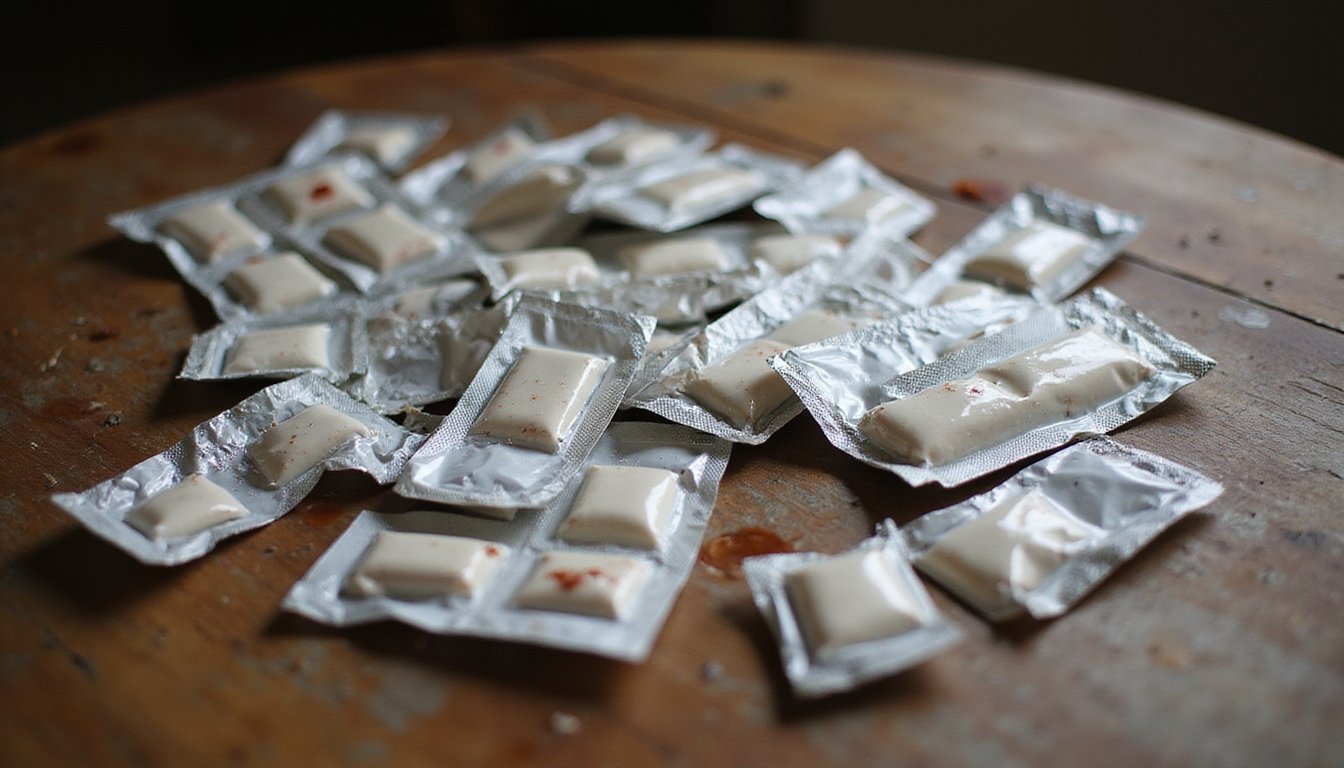
Understanding the distinction between drug trafficking and simple possession is critical because the legal consequences diverge dramatically even when the underlying conduct appears similar. When you’re facing drug trafficking charges, prosecutors must establish intent to manufacture, distribute, or sell controlled substances, not merely personal use. The trafficking vs possession divide often hinges on quantity thresholds, circumstantial evidence like packaging materials, digital scales, or large cash amounts.
You should recognize that possession typically constitutes a misdemeanor carrying up to one year for first offenses, while trafficking triggers felony classifications with mandatory minimums starting at five years. Federal trafficking sentences average approximately 82 months. Two defendants arrested with identical quantities can receive vastly different outcomes based solely on whether prosecutors file possession or trafficking charges, making the charging decision itself the most consequential factor.
How Much Drug Weight Triggers a Trafficking Charge?
The weight of drugs in your possession can single-handedly determine whether you’re charged with simple possession or a trafficking felony carrying mandatory prison time. Each controlled substance carries its own statutory threshold, for example, federal law triggers trafficking charges at 500 grams for powder cocaine, 28 grams for crack cocaine, and just 40 grams for fentanyl. Understanding these substance-specific quantity limits is critical to your defense because even a marginal difference of a few grams can mean the difference between probation and a mandatory minimum sentence of five years or more.
The weight of drugs in your possession can single-handedly determine whether you’re charged with simple possession or a trafficking felony carrying mandatory prison time. Each controlled substance carries its own statutory threshold, for example, federal law triggers trafficking charges at 500 grams for powder cocaine, 28 grams for crack cocaine, and just 40 grams for fentanyl. Understanding these substance-specific quantity limits is critical to your defense because even a marginal difference of a few grams can mean the difference between probation and a mandatory minimum sentence of five years or more, especially when additional allegations like a legend drug deception charge come into play.
Statutory Weight Thresholds
Because federal drug trafficking penalties hinge on precise weight thresholds rather than vague judicial assessments, the quantity of a controlled substance in your possession can single-handedly determine whether you’re facing a few years in prison or decades behind bars. Under 21 U.S.C. § 841, statutory minimum penalties activate at specific drug weights: 500 grams of cocaine triggers a five-year mandatory minimum, while 5 kilograms escalates that to ten years. Heroin thresholds sit at 100 grams and 1 kilogram, respectively. Fentanyl’s extraordinary potency drops these triggers dramatically, just 40 grams locks in five years. You should note that crack cocaine carries disproportionately lower thresholds at 28 grams and 280 grams. These bright-line rules leave judges virtually no discretion to sentence below the prescribed minimums.
Substance-Specific Quantity Limits
While the previous section outlined how federal statutes attach mandatory minimums to specific drug weights, state-level trafficking thresholds often diverge sharply, and understanding exactly where those lines fall for each substance can mean the difference between a possession charge and a decades-long prison sentence. In Florida, drug trafficking charges trigger at vastly different weights depending on the substance: 25 pounds for cannabis, 28 grams for cocaine, 14 grams for methamphetamine, and just 4 grams for fentanyl or heroin. These disparities reflect each drug’s perceived danger and potency. You’ll notice opioids carry the lowest thresholds, fentanyl’s 4-gram trigger carries a 25-year mandatory minimum and $500,000 fine. Cocaine base maintains separate thresholds from powder cocaine, while MDMA triggers at 10 grams. Exceeding these limits automatically escalates your charge regardless of proven intent to distribute.
How Florida Charges Trafficking Based on Weight Alone

Unlike most serious criminal charges that require prosecutors to prove criminal intent, Florida’s drug trafficking statute operates on a fundamentally different principle, weight alone determines the charge. Under Fla. Stat. § 893.135, you don’t need to sell, distribute, or even intend to traffic drugs. If the substance you possess meets the statutory weight threshold, you’re automatically facing drug trafficking charges.
This weight-based framework functions as a strict-liability system. Possess 28 grams of cocaine, 14 grams of methamphetamine, or just 4 grams of fentanyl, and mandatory minimum sentences activate regardless of your circumstances. Judges can’t override these minimums unless prosecutors agree. You could be a first-time offender with no distribution history, yet Florida law treats you identically to someone running a large-scale operation.
How Prosecutors Prove Drug Trafficking Intent
Though Florida’s weight-based system can trigger trafficking charges through possession alone, most jurisdictions require prosecutors to prove something far more difficult, that you actually intended to distribute drugs. This intent element fundamentally separates trafficking from simple possession.
Prosecutors must establish two critical components: you possessed clear intention to commit the offense and took a substantial step toward completing it. They don’t need to prove drugs were actually delivered or sold, only that you planned distribution and acted on that plan. Understanding the legal framework is crucial, especially regarding the statute of limitations on federal drug charges. Once the time period has expired, the government loses the ability to prosecute, which can significantly impact your case. It’s essential to know these timelines in order to defend yourself effectively.
The substantial step requirement distinguishes actionable criminal conduct from mere thought. You can’t face trafficking charges for contemplating a sale. However, once you’ve moved beyond preparation into demonstrable behavior, purchasing packaging materials, coordinating with buyers, or transporting product, prosecutors have the foundation they need to build their case.
Mandatory Minimum Sentences for Drug Trafficking
Once prosecutors establish trafficking intent, the sentencing framework shifts dramatically, federal mandatory minimums remove nearly all judicial discretion and lock defendants into predetermined prison terms based on drug type, quantity, and criminal history.
| Offense Tier | Sentence Range |
|---|---|
| Tier 1 (1 kg+ heroin/cocaine) | 10 years to life |
| Tier 2 (100g+ heroin/cocaine) | 5 to 40 years |
| One prior drug felony | Minimums double |
| Death or serious injury | 20-year mandatory floor |
You should understand that mandatory minimum sentences for drug trafficking escalate aggressively with prior convictions. Two or more drug felony priors trigger life imprisonment. If death results and you’ve got a prior conviction, you’re facing mandatory life, no exceptions, no judicial override.
How a Drug Trafficking Conviction Affects Your Future
Beyond the prison sentence itself, a drug trafficking conviction permanently reshapes your life in ways most defendants don’t fully anticipate until it’s too late. Employers in healthcare, finance, education, and government routinely disqualify applicants with felony records. Landlords deny housing applications, and federal student aid eligibility disappears entirely.
The consequences of drug trafficking charges extend further than domestic barriers. Non-citizens face deportation, green card revocation, and permanent reentry denial. Professional licensing boards revoke credentials, eliminating entire career paths you’ve built over decades.
Social consequences compound these legal penalties. Community networks withdraw support, personal relationships fracture under reputational damage, and isolation persists long after you’ve completed your sentence. Each restriction reinforces the next, creating compounding barriers to rebuilding any semblance of stability.
Facing Drug Charges in Georgia?
A drug charge in Georgia can carry heavy penalties and a lasting record. At Cobb Defense, Attorney Gregory Chancy and his team help clients across Marietta and Cobb County fight these charges and work to get them reduced or dismissed. If you need help with drug crime defense, call (770) 627-3221 today for a free consultation.
Frequently Asked Questions
Can Drug Trafficking Charges Be Reduced to a Lesser Offense Through Plea Bargaining?
Yes, you can potentially reduce drug trafficking charges through plea bargaining. Your attorney can negotiate with prosecutors to lower charges to lesser offenses like simple possession, depending on the evidence’s strength, your criminal history, and your willingness to cooperate. You shouldn’t underestimate this strategy, it’s often your most effective tool for avoiding mandatory minimum sentences. However, federal cases typically offer less flexibility than state prosecutions, so you’ll need experienced legal counsel.
Does Drug Trafficking Carry Different Penalties for First-Time Versus Repeat Offenders?
Yes, you’ll face dramatically different penalties depending on your criminal history. As a first-time offender, you’re typically looking at mandatory minimums, like Georgia’s 10-year sentence for trafficking over 28 grams of cocaine. However, if you’re a repeat offender, you’re facing exponentially harsher consequences. Washington State imposes life imprisonment after two or more prior convictions, while federal mandatory minimums increase substantially. Your prior record directly determines your sentencing exposure.
Can Someone Face Both Federal and State Trafficking Charges Simultaneously?
Yes, you can face both federal and state trafficking charges simultaneously for the same conduct. The dual sovereignty doctrine allows separate prosecutions because federal and state governments are distinct sovereigns, meaning double jeopardy protections don’t apply across jurisdictions. You’ll want to understand that prosecutors at both levels can independently pursue charges, though they’ll often coordinate to determine which jurisdiction takes the lead based on the case’s scope and severity.
Are Mandatory Minimum Sentences for Drug Trafficking the Same in Every State?
No, mandatory minimum sentences for drug trafficking aren’t the same in every state. Each state establishes its own sentencing structures independently. For example, Georgia imposes a mandatory 10-year minimum for possessing 28+ grams of cocaine, while Washington state doesn’t impose quantity-based mandatory minimums at all. Texas uses a penalty group system with staggered sentences based on drug classification. You’ll find significant variation depending on which state’s jurisdiction applies to your case.
Can a Drug Trafficking Charge Be Expunged From Your Criminal Record?
In some jurisdictions, you can expunge a drug trafficking charge, but it’s exceptionally difficult. Most states restrict expungement for serious felony convictions, and trafficking charges typically fall into that category. You’ll need to meet strict eligibility requirements, including completing your sentence, waiting periods, and demonstrating rehabilitation. Federal trafficking convictions are generally not eligible for expungement. You should consult a criminal defense attorney who can evaluate your specific case and jurisdiction’s laws.