In Georgia, you generally don’t have to talk to the police, but your obligations depend on the situation. During a traffic stop, you must provide your license, registration, and proof of insurance. As a passenger, you’ll only need to identify yourself if police have reasonable suspicion. You should explicitly invoke your right to remain silent rather than just staying quiet. There’s much more you’ll want to know before your next encounter with law enforcement.
Do You Have to Talk to the Police in Georgia?

When police approach you in Georgia, you generally don’t have to answer their questions, but the specifics depend heavily on the circumstances. The Fifth Amendment gives you the right to remain silent, and Georgia law reinforces that protection against self-incrimination during police encounters. It’s important to understand your rights during police questioning, as any statements made can be used against you later in court. Familiarizing yourself with these rights can help ensure that you are treated fairly and that your legal protections are upheld. Always remember, if you feel uncomfortable or unsure, you can request legal representation before proceeding with any discussion.
You’re not obligated to answer questions unless officers have probable cause or reasonable suspicion of a crime. However, if you’re driving, you must provide your license, registration, and proof of insurance. Outside of that, volunteering detailed information carries real risk, lying to police about material facts can result in a $1,000 fine and up to five years in prison. You’re not obligated to answer questions unless officers have probable cause or reasonable suspicion of a crime. However, if you’re driving, you must provide your license, registration, and proof of insurance. Outside of that, volunteering detailed information carries real risk, lying to police about material facts can result in a $1,000 fine and up to five years in prison. In situations where questioning escalates or legal consequences become possible, many people quickly start researching how much does it cost to hire a criminal defense attorney, since having professional legal representation can significantly affect how a case develops. (Insert the keyword naturally after explaining the legal risks of lying to police, as shown above.)
Staying silent is legally protected and can’t be treated as evidence of guilt. Knowing when and how to exercise that right matters. If you are placed in custody and questioned, law enforcement is required to inform you of your rights through a Miranda warning before any interrogation begins.
What Happens If You Stay Silent During Questioning?
Once Miranda warnings are issued, protected silence requires a clear, unambiguous invocation. Simply going quiet isn’t enough. Vague statements like “Maybe I should get a lawyer” often fail legal scrutiny. You must explicitly state you’re invoking your right to remain silent, compelling officers to stop questioning immediately until counsel arrives. Georgia courts take this invocation seriously, and any continued questioning afterward can result in those statements being suppressed at trial.
When Can Georgia Police Legally Demand Your ID?
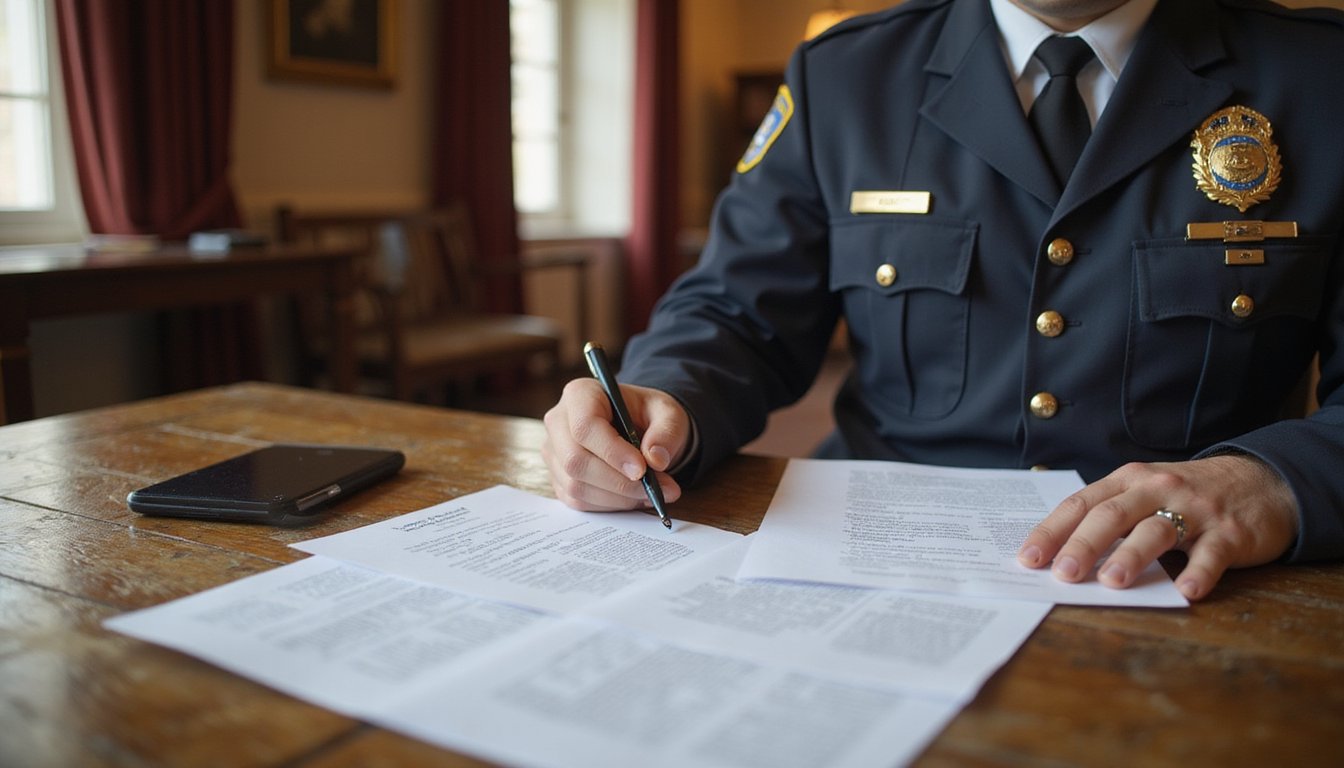
Georgia’s rules on when police can legally demand your ID depend heavily on the nature of the encounter. Under georgia police questioning law, your obligation to identify yourself shifts based on context.
| Encounter Type | ID Required? |
|---|---|
| Voluntary encounter | No |
| Traffic stop (driver) | Yes |
| Traffic stop (passenger) | Only with reasonable suspicion |
| Lawful detention | Yes |
| Arrest | Yes |
During voluntary encounters, you’re not legally required to provide identification. Drivers, however, must present their license, registration, and proof of insurance under Georgia statutes. Passengers face no such requirement unless officers have articulable suspicion of criminal involvement. Once you’re detained or arrested, compliance becomes mandatory. Refusing during a lawful detention can escalate complications, and providing false identification violates O.C.G.A. § 16-10-25. Certain locations, such as airports or federal buildings, may also require you to show ID as a condition of entry, regardless of any criminal suspicion.
How Do You Actually Invoke Your Right to Remain Silent?
Knowing your rights means little if you can’t properly assert them. In Georgia, simply staying quiet isn’t enough. Courts require a clear, explicit verbal statement to honor your invocation.
In Georgia, silence alone won’t protect you, courts demand a clear, explicit verbal statement to honor your rights.
When you’re asked whether you have to talk to police in Georgia, the answer is no, but you must say so directly. Use precise language like: When do police not need a warrant to search is another common question that arises in legal situations. Generally, they can perform searches without a warrant if there are exigent circumstances, if the individual consents, or if the search occurs during a lawful arrest.
- “I am invoking my right to remain silent.”
- “I don’t answer questions without my attorney present.”
- “I’m taking the 5th Amendment and will remain silent until I speak with my attorney.”
Once you’ve invoked, officers must stop questioning you. Any statements they make risk suppression in court afterward. Your silence also can’t be used as evidence of guilt, protecting you throughout the legal process.
What Can Georgia Police Do: and Not Do: During Interrogation?
Understanding what Georgia police can and can’t do during an interrogation helps you recognize when your rights are being violated. When refusing police questioning Georgia residents should know these permitted and prohibited tactics:
Police Can:
- Lie about evidence, like claiming they have your DNA (Frazier v. Cupp, 1969)
- Use deception if it doesn’t overbear your will
Police Cannot:
- Use physical force or psychological coercion
- Promise leniency or threaten harsher punishment
- Lie about your legal rights, including your right to silence
Under O.C.G.A. § 24-8-824, confessions induced through hope of benefit or fear are inadmissible. Courts evaluate voluntariness using the totality of circumstances, considering factors like interview length, number of interrogators, and your age. Recognizing these boundaries protects you.
You Have the Right to Stay Silent, Use It
Many people feel pressured to talk to the police in Georgia, but what you say can and will be used against you. Knowing your rights before that moment comes is one of the most powerful things you can do to protect yourself. At Cobb Defense, Attorney Gregory Chancy and his team are dedicated to protecting your rights from the very first interaction with law enforcement. Explore our criminal defense services to learn how we can help. Call (770) 627-3221 today for a free consultation and let us start building your defense.
Facing Criminal Charges in Georgia?
A criminal charge in Georgia can put your record and your future at risk. At Cobb Defense, Attorney Gregory Chancy and his team help clients across Marietta and Cobb County fight these charges and work to get them reduced or dismissed. If you need help with criminal defense, call (770) 627-3221 today for a free consultation.
Frequently Asked Questions
Can Juveniles Invoke the Right to Remain Silent Without a Parent Present?
Yes, you can invoke your right to remain silent without a parent present in Georgia. However, you must make a clear, explicit statement to invoke this right, silence alone isn’t sufficient. Once you’ve invoked it, police must stop questioning you. Remember, officers can legally deny your parent’s presence during questioning. Because juvenile waivers face court scrutiny, you should understand your rights fully before any police interaction.
What Happens if Police Continue Questioning After You Invoke Your Rights?
If police continue questioning you after you’ve invoked your rights, any statements you make are likely inadmissible in court. Officers must immediately stop interrogation once you’ve clearly said, “I want a lawyer” or “I want to remain silent.” Continued questioning violates the Edwards rule, triggering evidence suppression. Courts will scrutinize the timing and context of the interrogation. Consulting a defense attorney can help you challenge any improperly obtained statements.
Can Verbal Waivers Replace Signed Miranda Waiver Forms in Georgia?
Yes, verbal waivers can replace signed Miranda waiver forms in Georgia. You don’t need to sign anything for a waiver to be valid. Courts will accept your verbal agreement to speak with police if it’s knowing, intelligent, and voluntary. However, you should understand that judges evaluate the totality of circumstances, meaning coercion, misleading conduct, or mental impairment could challenge your waiver’s validity. Consulting an attorney beforehand is always advisable.
How Does Invoking Silence Affect a Case if Already Under Arrest?
Once you’re under arrest, invoking your right to silence substantially protects your case. When you clearly state “I want to remain silent” or “I want a lawyer,” officers must stop questioning you immediately. Any statements they obtain after your invocation are likely inadmissible in court. Your silence also can’t be used as evidence of guilt. However, you must invoke this right explicitly, vague statements won’t provide the same legal protection.
Are Statements Made Before Miranda Warnings Admissible in Georgia Courts?
Statements you make before Miranda warnings are generally inadmissible if you’re in custody and being interrogated. However, exceptions exist, your voluntary, spontaneous statements remain admissible even without warnings. Statements made during non-custodial situations, like traffic stops, can also be used against you. Additionally, physical evidence discovered through un-Mirandized statements may still be admissible under the inevitable discovery doctrine. Consulting a defense attorney helps you understand how these rules apply to your situation.