You can beat a drug possession charge by challenging the legality of the search and seizure, disputing your actual knowledge or control of the substance, or attacking weak forensic evidence. If police lacked reasonable suspicion, extended your detention unlawfully, or searched without proper consent, the evidence may be suppressed. You’ll also want to explore diversion programs that can lead to charge dismissal. Each strategy below breaks down exactly how to protect your rights and freedom. Felony drug penalties in Georgia can be severe, so it is crucial to understand the potential consequences. Consulting with an experienced attorney can provide insights into possible defenses and alternative outcomes.
Challenge the Legality of the Search and Seizure

One of the most powerful weapons in your defense arsenal is challenging the legality of the search and seizure that led to your drug possession charge. If police violated your Fourth Amendment rights, any evidence they obtained becomes inadmissible under the exclusionary rule.
You can attack the initial stop by questioning whether officers had reasonable suspicion. Did they rely on vague hunches, your race, or neighborhood reputation? You should also examine whether they unlawfully extended the detention beyond its original purpose. However, be aware that drug detection dog sniffs during a lawful traffic stop have been ruled constitutional under Illinois v. Caballes.
Additionally, you can target excessive force during the encounter or allege selective enforcement based on discriminatory factors. Challenge consent validity by demonstrating coercion or scope limitations. When searches lack proper warrants or legitimate exceptions, you’ll strengthen your suppression motion considerably. Successful suppression of illegally obtained evidence can lead to a complete dismissal of your case when the prosecution loses its key evidence.
Dispute Possession, Knowledge, or Control of the Drugs
Even if police lawfully found drugs, you can still fight the charge by attacking whether you actually possessed them, knew they existed, or had control over them. The shared space defense works powerfully when drugs are discovered in areas accessible to roommates, family members, or guests, forcing prosecutors to prove the drugs were specifically yours. Your attorney can challenge constructive possession by demonstrating you lacked exclusive access, had no knowledge of the drugs’ presence, and showed no other incriminating connections to the contraband. Florida law distinguishes between simple possession and possession with intent to distribute, which significantly affects the charges you face and the defense strategies available to you. In cases of mistaken identity, your defense can argue that someone else was the actual person in possession of the controlled substance.
Shared Space Defense
When drugs are found in a shared living space or vehicle, prosecutors face a significant hurdle: proving that *you*, and not someone else with equal access, actually possessed the contraband.
Your defense can mitigate circumstantial evidence by demonstrating that roommates, family members, or frequent guests routinely accessed the area where drugs were discovered. Common locations like kitchen cabinets, shared closets, or vehicle consoles are particularly vulnerable to this challenge. This defense strategy is especially effective when drugs are found in a vehicle with multiple occupants, as no single person can be definitively linked to the contraband.
To emphasize lack of intent, your attorney can attack linking evidence, personal items near drugs don’t establish control when multiple people store belongings together. The absence of fingerprints, DNA, or direct forensic connections further weakens the prosecution’s case. Remember that the prosecution must prove knowing possession, which becomes extremely difficult when borrowed belongings or shared spaces are involved.
Establishing that others had equal or greater access creates reasonable doubt about dominion and control, making constructive possession nearly impossible to prove beyond a reasonable doubt.
Proving Actual Knowledge
| Prosecution’s Burden | Defense Strategy | Key Evidence Gaps |
|---|---|---|
| Knowledge of presence | Challenge proximity assumptions | No fingerprints on packaging |
| Awareness of drug character | Argue substance was disguised | No admissions or statements |
| Establishing willful blindness | Counter with innocent explanations | No observed handling |
Your attorney should focus on emphasizing circumstantial evidence shortfalls. Missing forensic links, absence of body-camera footage showing acknowledgment, and lack of direct evidence all undermine the prosecution’s knowledge claims. Without proving your mental state, possession charges fail. The prosecution must establish two distinct elements of knowledge: your awareness of the drug’s presence and your awareness of its illegal nature. If someone else placed drugs in your belongings without your knowledge, this lack of awareness serves as a valid defense against possession charges.
Constructive Possession Challenges
Constructive possession charges crumble when prosecutors can’t prove you had actual dominion and control over the drugs, not just physical proximity to them. Understanding the various drug possession types can help clarify your legal standing. Defense strategies may differ significantly based on whether the charge involves simple possession or intent to distribute.
Your defense should assert lack of exclusive control over the space where drugs were found. When multiple people share access to a vehicle, apartment, or workplace, the prosecution’s case becomes speculation rather than proof. The jury must consider the totality of the circumstances when evaluating whether constructive possession has been established.
Key strategies to counter circumstantial evidence inferences:
- Challenge ownership of the vehicle, room, or container where drugs were discovered
- Highlight absence of fingerprints, DNA, or forensic links tying you to the substances
- Emphasize shared-access scenarios that break the connection to individual possession
- Point to missing indicators like personal documents or paraphernalia near the drugs
- Demonstrate you lacked keys, codes, or practical authority over restricted spaces
Without proof of your ability to direct the drugs’ use or movement, constructive possession fails. The prosecutor must establish both elements beyond a reasonable doubt, and failing to prove either knowledge or dominion and control results in a not guilty verdict.
Attack the Chain of Custody and Evidence Handling
If the prosecution can’t prove the drugs entered into evidence are the same ones allegedly found on you, their case falls apart. You can challenge weak links in the chain of custody by exposing gaps in evidence room records, questioning whether lab testing procedures met forensic standards, and highlighting inconsistencies in documentation that cast doubt on the evidence’s integrity. Drug evidence can be easily contaminated or degraded, making proper handling procedures even more critical to the state’s case. These attacks target the foundation of the state’s physical evidence and can result in suppression or diminished credibility at trial. When evidence tampering or procedural missteps are demonstrated, these constitutional violations can significantly weaken the prosecution’s ability to prove their case beyond a reasonable doubt.
Expose Evidence Room Gaps
When prosecutors present drug evidence at trial, they must prove an unbroken chain of custody, a documented record showing every person who handled the evidence from seizure to courtroom. You can challenge this by exposing vulnerabilities in evidence room operations.
Evidence-management professionals acknowledge that drug theft from property rooms is “not uncommon.” Your defense attorney can investigate whether the facility handling your case has:
- Improper storage conditions leading to contamination or degradation
- Lack of oversight audits enabling undetected losses
- Unrestricted access without dual-custodian procedures
- Prior internal investigations into missing evidence
- Overcrowded storage causing mislabeling or commingling
If the evidence room has documented shortages, security breaches, or organizational failures, your attorney can use these systemic problems to impeach the integrity of the drugs allegedly seized in your case. This strategy is particularly effective given that 56% of agencies did not have a computerized system to track forensic evidence, making it difficult for prosecutors to definitively prove proper handling throughout the chain of custody. Additionally, 38% of agencies have no policy to preserve biological evidence after a defendant is found guilty, revealing broader systemic weaknesses in evidence retention that your attorney can highlight to question overall evidence management practices.
Challenge Lab Testing Procedures
How thoroughly did the crime lab actually test the substance prosecutors claim you possessed? Your defense attorney should scrutinize whether technicians followed sample preservation protocols and maintained proper calibration records. Analytical instrumentation errors, including overdue calibrations or failed quality-control runs, can invalidate test results entirely.
| Vulnerability | What to Examine | Defense Impact |
|---|---|---|
| Contamination | Blank samples, clean glassware protocols | Results may reflect carryover from other cases |
| Documentation | Bench notes, worksheets, weight records | Missing steps undermine reliability |
| Quality Control | Calibration logs, proficiency testing | Failed checks invalidate conclusions |
You’ll want your attorney to demand complete laboratory records, including analyst certifications and peer review documentation. Labs operating without ISO/IEC 17025 accreditation or ignoring written SOPs provide fertile ground for challenging the prosecution’s scientific evidence. An experienced attorney can subpoena lab records, cross-examine technicians, and consult toxicologists to expose unreliable testing procedures that may undermine the prosecution’s case.
Highlight Documentation Failures
Scientific testing tells only part of the story, your defense must also target the paper trail prosecutors rely on to prove the drugs in court are the same substances police allegedly seized from you.
Your attorney should examine documentation for these critical weaknesses:
- Missing chain of custody signatures indicating gaps in who handled evidence and when
- Labeling errors such as incorrect case numbers, dates, or item descriptions across forms
- Conflicting quantity records between property sheets, lab submissions, and officer reports
- Unsecured storage documentation revealing evidence tampering concerns through inadequate access controls
- Agency protocol deviations exposing procedural compliance issues that undermine reliability
Any break in documentation creates reasonable doubt about whether prosecutors can authenticate the evidence. Sloppy paperwork transforms a seemingly straightforward case into a defensible one.
Argue Personal Use Instead of Intent to Distribute
Although prosecutors often pursue the harsher charge of possession with intent to distribute, you can fight back by demonstrating that the drugs were solely for your personal use. The prosecution must prove intent to sell beyond a reasonable doubt, and quantity alone rarely satisfies this burden.
Your defense should highlight the absence of distribution indicators, no scales, baggies, ledgers, or large cash amounts. Expert testimony on addiction patterns can explain why users sometimes possess more than single-use quantities. Treatment records and paraphernalia associated with consumption strengthen your position.
For ambiguous evidence, present benign explanations. Baggies may serve storage purposes; cash could stem from lawful sources. This reframing can reduce charges to simple possession, opening doors to diversion programs and treatment-based alternatives instead of incarceration.
Raise an Entrapment Defense Against Law Enforcement
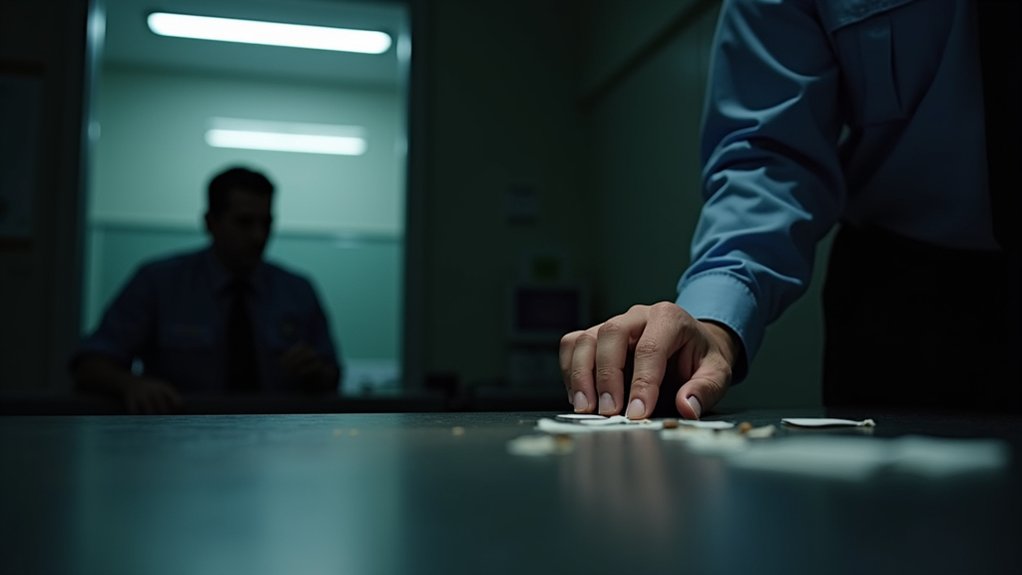
When law enforcement crosses the line from investigating crime to manufacturing it, you may have grounds for an entrapment defense that can result in complete dismissal of your drug possession charges. Marijuana laws in Georgia have become increasingly complex, leaving many individuals unsure of their rights. Understanding these regulations is essential, especially if you believe that law enforcement has overstepped their boundaries.
To succeed, you must demonstrate police inducement and your lack of predisposition to commit the offense. Your attorney will evoke undercover conduct that went beyond providing mere opportunity, showing threats, repeated pressure, or exploitation of vulnerabilities.
Key evidence supporting entrapment includes:
- Recordings or texts showing law enforcement initiated the drug transaction
- Documentation of repeated pressure or harassment by informants
- Absence of prior drug offenses in your history
- Evidence of mental health issues or cognitive vulnerabilities exploited by police
- Training violations or improper informant incentive structures
Prosecutors will assert predisposition through your prior conduct, making experienced legal counsel essential.
Expose Constitutional and Procedural Violations
How effectively can your defense dismantle the prosecution’s case when police violated your constitutional rights during the investigation? The Fourth Amendment protects you from unreasonable searches and seizures, and when officers overstep, your attorney can assert absence of probable cause or valid warrants to suppress critical evidence.
Constitutional violations take many forms: warrantless searches without proper exceptions, prolonged traffic stops to summon K-9 units, coerced consent, or arrests based on hunches rather than articulable facts. Each violation triggers the exclusionary rule, potentially eliminating the prosecution’s key evidence as “fruit of the poisonous tree.”
Your defense can also establish mitigating procedural failures, defective warrants, overbroad search scopes, or exceeded search-incident-to-arrest boundaries. When police don’t follow constitutional requirements, the drugs they find become inadmissible, often collapsing the entire case against you.
Pursue Diversion Programs and Alternative Resolutions

Even if the prosecution’s evidence withstands constitutional challenges, you still have powerful options to avoid conviction through diversion programs and alternative resolutions.
These programs prioritize rehabilitation over punishment, particularly for first time offender considerations and cases involving substance abuse treatment options. Research shows diversion participants have a 31.5% recidivism rate compared to 41.3% for traditionally processed defendants.
Key diversion pathways include:
- Pretrial diversion that dismisses charges upon completion
- Drug courts reducing recidivism by approximately 26%
- Treatment alternatives requiring 18, 24 months of community-based care
- Prebooking diversion avoiding formal charges entirely
- Statutory programs mandating treatment instead of incarceration
Successful completion typically results in charge dismissal, preventing a permanent criminal record that affects employment, housing, and licensing. Your attorney can negotiate these alternatives even after arrest.
Frequently Asked Questions
How Long Does a Drug Possession Charge Stay on My Criminal Record?
A drug possession charge typically stays on your criminal record indefinitely unless you take action. You’ll need to actively pursue expunging records or sealing convictions through the court system, most jurisdictions won’t automatically remove them. Your eligibility depends on factors like whether you were convicted, the offense level, and your state’s laws. Misdemeanors are generally easier to clear than felonies. Consult an attorney to explore your record-clearing options and protect your future opportunities.
Can I Lose My Job or Professional License After a Drug Charge?
Yes, you can face serious professional implications after a drug charge. Many employers terminate workers under criminal-conduct policies, and licensing boards can suspend or revoke credentials in healthcare, education, law, and finance. The financial consequences extend beyond fines, you may lose your career, struggle to find new employment, or face insurance barriers. Acting quickly with a strong defense strategy can help you avoid conviction and protect your livelihood.
Will a Drug Possession Conviction Affect My Child Custody Rights?
Yes, a drug possession conviction can substantially impact your child custody rights. Courts prioritize your child’s safety, so they’ll scrutinize whether your conviction suggests an unsafe environment. Recent or repeated offenses carry more weight than isolated incidents.
To protect your custody rights, you’ll need strong proof of rehabilitation, documented treatment, clean drug tests, and stable living conditions. Character witnesses who can attest to your sobriety and parenting abilities also strengthen your case significantly.
How Much Does Hiring a Drug Defense Attorney Typically Cost?
You’ll typically pay between $1,500 and $15,000 for drug defense representation, depending on your charge’s severity. Most attorneys require an attorney retainer fee of $2,000 to $10,000 upfront, credited against hourly work. Misdemeanor possession cases often cost $1,000 to $5,000, while felonies run $5,000 to $25,000 or more. Don’t forget additional expenses like court filing costs, expert witnesses, and investigation fees that add to your total investment.
Can I Travel Internationally With a Drug Possession Conviction on My Record?
You may face restricted travel options with a drug possession conviction on your record. Many countries, including Canada, the UK, and Australia, can deny you entry or subject you to increased screening procedures at their borders. Before booking any international trip, you should contact the destination country’s embassy or consulate to verify entry requirements. Consulting an immigration attorney helps you understand your specific risks and explore options like rehabilitation applications.