Drug possession is criminalized to protect you and your community from extensive public health risks and systemic harm. You’ll face legal consequences because controlled substances threaten individual and collective well-being, disrupt social infrastructures, and fuel transnational criminal networks. The law aims to prevent widespread health complications, reduce infectious disease transmission, and mitigate the profound economic and social impacts of unregulated drug consumption. Exploring further reveals deeper complexities.
Public Health and Safety Concerns

The staggering prevalence of drug-related health risks underscores the complex public health challenges surrounding drug possession. With over 100,000 annual overdose deaths and 24 million individuals experiencing drug use disorders, the landscape reveals significant treatment access barriers. Public stigma further complicates intervention efforts, preventing many from seeking necessary medical support. Injection drug use heightens risks of communicable diseases like HIV and hepatitis C, particularly impacting marginalized communities. The interconnected nature of drug misuse extends beyond individual health, affecting community safety and systemic well-being. While criminalization hasn’t demonstrably reduced overdose rates, it has created additional obstacles to expansive healthcare approaches. The racial disparities in drug enforcement dramatically illustrate how systemic policies disproportionately impact minority communities, creating additional layers of health and social complexity. Decriminalization policies offer a potential alternative approach to addressing drug possession by reducing arrests and potentially minimizing harm to individuals and communities. Syringe Exchange Programs have proven effective harm reduction strategies, reducing disease transmission and providing critical pathways to treatment for vulnerable populations. Understanding these multifaceted health implications requires a nuanced, evidence-based perspective that prioritizes harm reduction and compassionate intervention strategies.
Legal Classification of Controlled Substances
While drug possession laws stem from complex societal concerns, understanding the legal classification of controlled substances provides critical insight into how governments regulate psychoactive compounds. The scientific criteria for scheduling substances involve evaluating eight statutory factors, including abuse potential, pharmacological effects, and public health risks. You’ll find that the scheduling process categorizes drugs across five schedules, ranging from Schedule I (high abuse, no medical use) to Schedule V (lowest abuse potential). The Drug Enforcement Administration and Food and Drug Administration collaborate to assess and periodically reassess substance classifications based on exhaustive scientific and epidemiological data. This systematic approach allows for nuanced regulation that balances medical utility, potential harm, and societal impact. The original Controlled Substances Act of 1970 established the fundamental framework for categorizing and regulating psychoactive substances at the federal level. Moreover, websites like americanaddictioncenters.org play a crucial role in providing resources and information about substance abuse and legal regulations.
Social and Personal Risks of Drug Use

Drug possession’s multifaceted risks extend far beyond legal consequences, encompassing profound personal and societal challenges that compromise individual well-being and community stability. The emotional toll on families and the burden on healthcare systems are significant:
- Personal Health: Substance abuse can lead to severe physical and mental health complications, including infectious diseases, cognitive impairments, and increased risk of psychiatric disorders. Family members often experience intense emotional distress as they witness their loved one’s deteriorating health and struggle with the disorder. Over 3.5 million adults have reported injecting illicit drugs, with widespread health consequences impacting individuals and communities. Juvenile justice professionals have observed that substance abuse significantly increases the likelihood of systemic behavioral disruption.
- Family Dynamics: Drug use often fractures family relationships, causing dysfunction, financial strain, and potential neglect or abuse of children.
- Educational Disruption: Academic performance suffers, with increased dropout rates, learning difficulties, and reduced future opportunities.
- Socioeconomic Impact: Substance abuse contributes to unemployment, economic burden, and higher rates of homelessness and criminal justice involvement.
These interconnected risks underscore the complex, destructive nature of drug possession.
Prevention of Drug Trafficking and Distribution
Massive global networks of drug trafficking pose intricate challenges for international law enforcement and policy makers, demanding sophisticated, multi-layered prevention strategies. You’ll find that interdiction tactics involve coordinated approaches targeting financial infrastructures and trafficking routes. International cooperation through organizations like UNODC enables real-time data collection, intelligence sharing, and strategic interventions across borders. With the United States spending approximately $50 billion annually on drug trafficking prevention and treatment, the economic impact of these global networks underscores the critical need for comprehensive and adaptive intervention strategies. Transnational criminal organizations control extensive drug trafficking corridors, significantly complicating global prevention efforts and threatening public safety. Regional drug monitoring programs like UNODC’s Global Synthetics Monitoring help track emerging synthetic drug markets and provide crucial intelligence for targeted prevention strategies.
Impact on Community Well-being
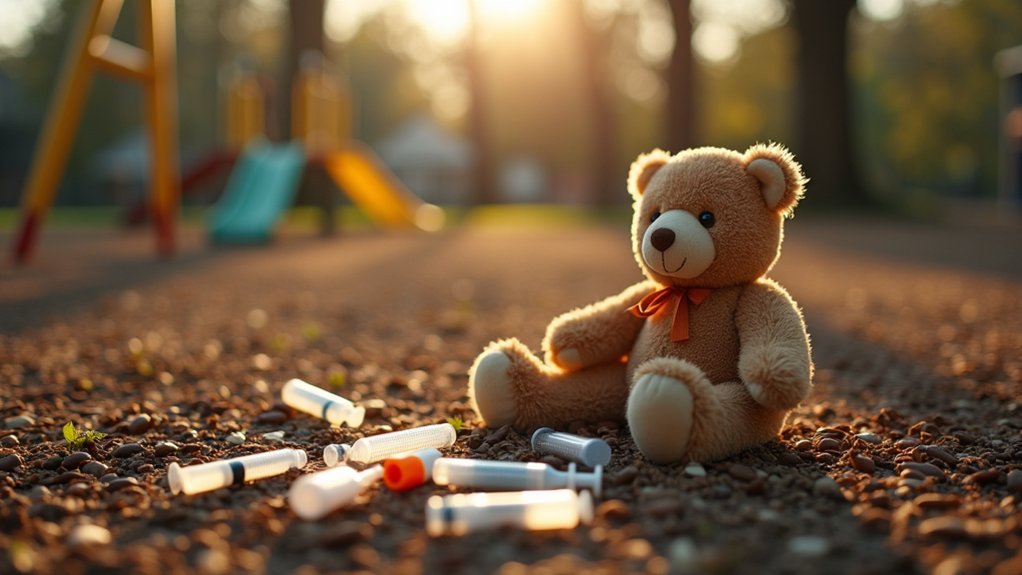
Although drug possession might seem like an individual transgression, its ripple effects profoundly destabilize entire community ecosystems. Your neighborhood’s well-being suffers through multiple interconnected dimensions:
- Community Cohesion Breakdown: Drug possession erodes social trust, fragmenting local support networks and increasing collective vulnerability. Infectious disease spread from drug use further weakens community health and interconnectedness.
- Resource Allocation Strain: Critical community resources get diverted from constructive prevention and recovery initiatives toward punitive responses. Criminalization of addiction perpetuates systemic cycles of punishment instead of addressing underlying health challenges.
- Safety Infrastructure Compromise: Increased drug-related activities overwhelm law enforcement, creating systemic vulnerabilities in public safety mechanisms.
- Socioeconomic Degradation: Persistent drug challenges perpetuate cycles of poverty, undermining community economic resilience and developmental potential.
Research indicates that neighborhood drug visibility can significantly impact community perceptions and social dynamics beyond actual drug use rates.
These multifaceted impacts demonstrate how individual drug possession transcends personal consequences, generating complex, systemic challenges that systematically undermine community stability and collective well-being.
Frequently Asked Questions
Can a Person Be Arrested for Drugs That Aren’t Physically on Their Body?
Yes, you can be arrested for drugs not physically on your body. During vehicle searches, law enforcement can charge you with constructive possession if drugs are found within your immediate control, such as the glove compartment or under your seat. Drug paraphernalia possession nearby can further substantiate charges, even without direct physical contact with the controlled substances. The legal standard focuses on your potential access and control.
How Do Prescription Medications Differ From Illegal Drug Possession Charges?
You’ll find prescription medications differ from illegal drug possession through their legal status of prescribed dosages and classification as controlled substances. Unlike street narcotics, these drugs have legitimate medical applications and require valid physician authorization. While possession without a proper prescription can result in criminal charges, the severity depends on the drug’s schedule, quantity, and your intent, ranging from misdemeanors to felonies based on specific circumstances.
What Happens if Someone Unknowingly Has Drugs in Their Possession?
If you’re found with drugs you didn’t know about, you’ll need to prove innocent possession through compelling evidence. Unintentional possession can be a valid legal defense, but you’ll bear the burden of demonstrating you weren’t aware of the drugs’ presence. Courts will scrutinize your claim, requiring credible proof of lack of knowledge or control. Successfully challenging the charges depends on presenting a substantive, well-documented explanation.
Do Drug Possession Laws Apply Equally Across Different States?
Drug possession laws don’t apply equally across states due to significant state by state variations. You’ll encounter unequal enforcement where identical drug quantities might trigger misdemeanors in one jurisdiction but felonies in another. Statutory definitions, penalty ranges, and prosecutorial discretion create a complex legal landscape where your geographic location dramatically influences potential legal consequences for drug possession charges.
Can Sharing Prescription Medication Result in Criminal Drug Possession Charges?
Yes, sharing prescription medication can result in criminal drug possession charges. When you divulge your prescribed medication to another person, you’re engaging in illegal drug distribution. Law enforcement views such sharing as a serious offense, potentially charging both the provider and recipient with possession. Diverted prescription drugs, even if shared without monetary exchange, can lead to misdemeanor or felony charges, depending on the medication and jurisdiction.